
God’s Name Among the Nations
Continuing our look into Malachi Chapter 1!
Before continuing into the second half of Malachi chapter one, it is important to remember what we learned in the previous section. God rebuked the priests for offering polluted sacrifices and for treating His worship as something common and unimportant. Their outward religious service no longer reflected hearts that honored God. Rather than giving Him their best, they offered Him what was left over. Beginning in verse 11, however, God shifts the focus from Israel’s failure to His own glorious plan. Even though Israel had dishonored Him, God’s purpose to glorify His name throughout the world would not fail.
“11. My name will be great among the nations, from where the sun rises to where it sets. In every place incense and pure offerings will be brought to me, because my name will be great among the nations,” says the LORD Almighty.
“12. But you profane it by saying, ‘The Lord’s table is defiled,’ and, ‘Its food is contemptible.’
13. And you say, ‘What a burden!’ and you sniff at it contemptuously,” says the LORD Almighty. “When you bring injured, lame or diseased animals and offer them as sacrifices, should I accept them from your hands?” says the LORD.
“14. Cursed is the cheat who has an acceptable male in his flock and vows to give it, but then sacrifices a blemished animal to the Lord. For I am a great king,” says the LORD Almighty, “and my name is to be feared among the nations.”
Malachi 1:11-14 (NKJV)
Malachi 1:11 declares, “For from the rising of the sun, even to its going down, My name shall be great among the Gentiles.” This verse can be understood in two beautiful ways. First, it can point prophetically to Jesus Christ—from His coming into the world to the completion of His earthly ministry through His death and resurrection. Throughout His life, Christ glorified the Father and fulfilled God’s plan of redemption. Secondly, the phrase can also describe the entire world and all of time, from east to west and from generation to generation (Romans 1:19-20). In either understanding, the central truth remains the same: God’s name will be glorified everywhere. This statement also serves as a remarkable hint that salvation would extend beyond Israel to the Gentiles through the coming Messiah. The prophets had already foretold the coming of Christ in passages such as Isaiah 7:14, Micah 5:2, and Zechariah 9:9. This also provides a foreshadowing of Revelation chapter 20 with the 1000-year reign of Jesus Christ. For at this moment, His name, while great, is not offered incense through the prayers throughout everywhere as we will fully see developed during the thousand years. What a marvelous time that will be, a time of Israel receiving the promises that they have been given, but the Gentile nations receiving the promises they have been given and the opportunity to jointly worship the King of Kings and the Lord of Lords.
The Lord continues by saying, “In every place incense shall be offered to My name, and a pure offering.” Under the Old Covenant, incense was part of the worship that symbolized prayers and devotion rising before God. Here, however, Malachi is shown beyond the temple in Jerusalem to a day when true worship would arise from every nation. This points to the Church, the Bride of Christ, worshiping God throughout the world. Psalm 86:9 declares that all nations whom God has made will come and worship before Him. The “pure offering” ultimately finds its fulfillment in Jesus Christ. Unlike the blemished sacrifices offered by Israel, Christ became the perfect and spotless sacrifice for sin once and for all. Hebrews 10:10–14 teaches that His one sacrifice has forever accomplished what the Old Testament sacrifices never could. After Christ’s resurrection, both Jews and Gentiles became one body through faith in Him, and the Gospel began to spread as commanded in Matthew 28.
Nevertheless, the prayers of the Saints are an incense before the Lord. Revelation 5:8“Now when He had taken the scroll, the four living creatures and the twenty-four elders fell down before the Lamb, each having a harp, and golden bowls full of incense, which are the prayers of the saints.” We can also see that the prayers of the Saints will one day be utilized as more than incense before the Lord. When we pray “Lord come soon,” or we pray for the Lord to act, and it appears that the Lord does not act, remember, He is acting on His time, not ours. Every prayer of judgment that the believers have asked for will come. Revelation 8:1-6“When He opened the seventh seal, there was silence in heaven for about half an hour. 2 And I saw the seven angels who stand before God, and to them were given seven trumpets. 3 Then another angel, having a golden censer, came and stood at the altar. He was given much incense, that he should offer [it] with the prayers of all the saints upon the golden altar which was before the throne. 4 And the smoke of the incense, with the prayers of the saints, ascended before God from the angel’s hand. 5 Then the angel took the censer, filled it with fire from the altar, and threw [it] to the earth. And there were noises, thunderings, lightnings, and an earthquake. 6 So the seven angels who had the seven trumpets prepared themselves to sound.” Why do I bring all this up? It is because one day the Lord will make His promises, as we see here in the book of Malachi, come to pass; thus, as we continue to read, keep that in mind.
Verse 12 returns to the present condition of Israel: “But you profane it, in that you say, ‘The table of the Lord is defiled; and its fruit, its food, is contemptible.’” While God was revealing His future plan of worldwide worship, the priests continued to despise His altar. They treated the Lord’s table as though it had little value. In the church age, we no longer bring animal sacrifices. However, we still bring offerings to God through our lives. Our obedience, worship, service, generosity, and love for others become spiritual sacrifices that honor Him. Romans 12:1 calls believers to present their bodies as living sacrifices, holy and acceptable to God, while Hebrews 13:16 reminds us that doing good and sharing with others are sacrifices that please the Lord. God desires that everything we do for Him be done with sincere love, gratitude, and joy rather than obligation or resentment.
In verse 13, the priests complain, “Oh, what a weariness!” They had become tired of serving God and viewed worship as a burden instead of a privilege. Their hearts had grown cold, and this attitude was revealed by the sacrifices they continued to offer—the stolen, the lame, and the sick. God then asks, “Should I accept this from your hand?” The question is rhetorical because the answer is clearly no. God is perfectly holy and cannot approve of evil or hypocrisy. Psalm 5:4 teaches that God takes no pleasure in wickedness, Habakkuk 1:13 reminds us that His eyes are too pure to look upon evil with approval, and Isaiah 59:2 explains that sin separates people from fellowship with God. Rather than simply condemning the priests, God asks this question so they might reflect upon their actions, recognize their sin, and return to Him with genuine repentance.
Malachi concludes the chapter with a final warning in verse 14: “But cursed be the deceiver… For I am a great King… and My name is to be feared among the nations.” Some Israelites possessed healthy, acceptable sacrifices, but intentionally offered blemished animals instead after making a vow to God. They broke their promises because they valued their possessions more than obedience. Their deception revealed hearts that did not truly fear the Lord. As Christians, we are called to live differently. 1 Peter 1:15–16 commands believers to be holy because God Himself is holy. Reverence for God is not simply fear of punishment but deep respect, awe, and obedience toward our King. Proverbs 9:10 teaches that the fear of the Lord is the beginning of wisdom, and Ecclesiastes 12:13 summarizes man’s duty: “Fear God and keep His commandments.” Israel repeatedly failed to live out that calling, but God never lowered His standard of holiness. One day, Israel will fulfill this calling. Read Ezekiel chapter 39 through the end of the book of Ezekiel and see the richness and the blessings that God will do with Israel. The book of Zachariah, chapter 13, says that a third of the Jews will make it through Jacob’s trouble and will be refined as silver, and they will fulfill the promises that they were commissioned to do.
In conclusion, Malachi 1:11–14 reminds us that God’s glory does not depend upon man’s faithfulness. Even when Israel failed to honor Him, God declared that His name would one day be great among all nations through the coming of Jesus Christ. Today, believers have the privilege of being part of the initial fulfillment of that promise as the Gospel continues to spread throughout the world. At the same time, this passage challenges us to examine our own hearts. Are we serving God with joy, gratitude, and reverence, or have we allowed worship to become routine and burdensome? God is worthy of our very best—not because we earn His favor, but because Christ has already given His life for us. Since Jesus became the perfect sacrifice, our response should be lives marked by holiness, faithful obedience, sincere worship, and a desire to glorify His great name among the nations.
Stay the Course for the Kingdom,
Austin
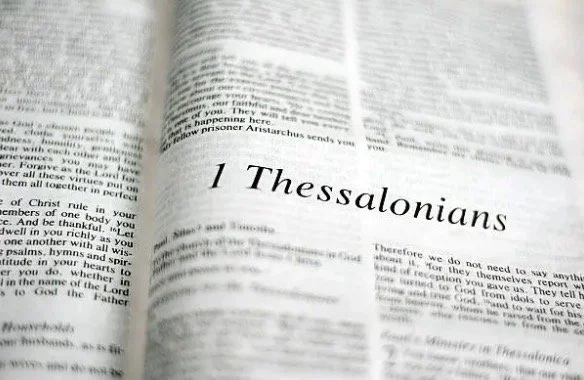
Introduction to 1 Thessalonians
Introduction into an incredible letter!
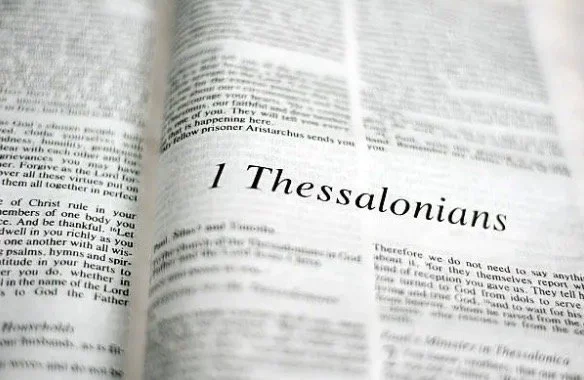
Today, we are going to begin a new study. But before we dive into the book of 1 Thessalonians, it is important to prepare ourselves for what we are going to learn. This short book dives into hard topics such as the purpose of God’s word, are we acting in a way to please man or God, are we encouraging believers to hold fast to the faith, the Christian’s calling, and where our hope is.
To understand more of this book, we first need to look at Acts 17. This dictates Paul’s missionary journey and details when he came to Thessalonica. “2 Then Paul, as his custom was, went in to them, and for three Sabbaths reasoned with them from the Scriptures, 3 explaining and demonstrating that the Christ had to suffer and rise again from the dead, and saying, “This Jesus whom I preach to you is the Christ.” Acts 17:2-3. Some of the Jews were persuaded by Paul’s argument, but many hardened their hearts to Paul’s teaching. In fact, they formed a mob that caused the family who was hosting Paul to be pulled out into the street. “6 But when they did not find them, they dragged Jason and some brethren to the rulers of the city, crying out, “These who have turned the world upside down have come here too. 7 Jason has harbored them, and these are all acting contrary to the decrees of Caesar, saying there is another king—Jesus.” 8 And they troubled the crowd and the rulers of the city when they heard these things. 9 So when they had taken security from Jason and the rest, they let them go.” Acts 17:6-9
The word “security” in verse 9 is also seen as pledge and most likely means that the angered Jews received a monetary payment from Jason and the others that Paul and Silas would not cause any further commotion in Thessalonica, which is consistent since Acts 17:10 shows Paul leaving for Berea.
With that background in mind, it is no wonder that Paul, through the Holy Spirit, wrote to the disheartened believers in Thessalonica. These believers had just seen how the angered Jews would treat those who professed their faith in Jesus Christ. With that fresh in their mind how could they possibly remain in the faith? This is the issue, among others, that Paul seeks to put to rest in the book of 1 Thessalonians. 1 Thessalonians was written to encourage the readers to remain steadfast in the faith and to not be concerned about Paul’s imprisonment but to keep the focus on sharing the gospel.
Next week, we will begin our look into 1 Thessalonians and see exactly what Paul has to say to these new believers.
Seek the truth and encourage one another,
Alex

A Study in Genesis
Let’s see how two men sought to do what was right.

We are back in the book of Genesis, and today we are examining a part of scripture that some might question why it is there. The covenant between Abimelech and Abraham opens the reader to a rather remarkable principle put into practice. Not only is it historical with how legal agreements were conducted, but it also shows the relationship that God provided Abraham. We see a principle of two men whose servants were at odds, and the rumor mill was dragging them apart. And yet, both sought to do what was right, both were honest and acknowledged their limits of what was known.
Let’s read Genesis 21:22-34 “And it came to pass at that time that Abimelech and Phichol, the commander of his army, spoke to Abraham, saying, “God [is] with you in all that you do. 23 “Now therefore, swear to me by God that you will not deal falsely with me, with my offspring, or with my posterity; but that according to the kindness that I have done to you, you will do to me and to the land in which you have dwelt.” 24 And Abraham said, “I will swear.” 25 Then Abraham rebuked Abimelech because of a well of water which Abimelech’s servants had seized. 26 And Abimelech said, “I do not know who has done this thing; you did not tell me, nor had I heard [of it] until today.” 27 So Abraham took sheep and oxen and gave them to Abimelech, and the two of them made a covenant. 28 And Abraham set seven ewe lambs of the flock by themselves. 29 Then Abimelech asked Abraham, “What [is the meaning of] these seven ewe lambs which you have set by themselves?” 30 And he said, “You will take [these] seven ewe lambs from my hand, that they may be my witness that I have dug this well.” 31 Therefore he called that place Beersheba, because the two of them swore an oath there. 32 Thus they made a covenant at Beersheba. So Abimelech rose with Phichol, the commander of his army, and they returned to the land of the Philistines. 33 Then [Abraham] planted a tamarisk tree in Beersheba, and there called on the name of the LORD, the Everlasting God. 34 And Abraham stayed in the land of the Philistines many days.”
Abimelech recognizes Abraham's special relationship with the Lord and what God was planning to do. This is not because Abraham was better than others, but because God chose him. Abimelech sees this and wants to be proactive to ensure he is not on the wrong side of history. To learn more about Abimelech, we need to read historical books such as the Book of Jasher, where we see more interaction between these two men. However, these 12 verses shed light on how we should treat one another. First, both communicate clearly, reveal their intentions, and are slow to anger. In our own lives, are we acting upon these three characteristics with those around us?
Secondly, we see them both listening to one another. Both allowed the other to speak and looked for common ground. Now, a moment of clarity. One can only seek common ground with a person who is also actively seeking the Lord. Evil and good can have no common ground, Proverbs 28:4-5 “Those who forsake the law praise the wicked, But such as keep the law contend with them. 5 Evil men do not understand justice, But those who seek the LORD understand all.” Also Proverbs 29:27 “An unjust man [is] an abomination to the righteous, And [he who is] upright in the way [is] an abomination to the wicked.” When we try to have common ground with evil, we only fail to uphold what is good. For Abimelech and Abraham, both wanted to pursue what was good. This allowed the opportunity for the covenant to be made and for Abraham to establish a marker for future descendants of his actions in the land.
This event is more than historical; it is a lesson in pursuing the good even when at odds with a fellow believer. This shows we can have common ground, but it must be rooted in both seeking the Lord’s direction.
Hold until relieved, our Blessed Hope is coming,
JL
SUMMER PRAYER FEST
This week, let’s focus on praying for the ability to discern what is happening in the world and reflect on how we should be acting as believers. This week’s Bible verse and focus is 1 Chronicles 12:32 “of the sons of Issachar who had understanding of the times, to know what Israel ought to do, their chiefs were two hundred; and all their brethren were at their command;”

Re-Post Friday
A look into Luke 8!
Understanding the power of transformation. Read it HERE!

Empty Worship and a Heart Far from God
Understanding reverence in worship.
"6. A son honors his father, And a servant his master. If then I am the Father, Where is My honor? And if I am a Master, Where is My reverence? Says the Lord of hosts To you priests who despise My name. Yet you say, 'In what way have we despised Your name?'
"7. You offer defiled food on My altar. But say, 'In what way have we defiled You?' By saying, 'The table of the Lord is contemptible.'
8. And when you offer the blind as a sacrifice, Is it not evil? And when you offer the lame and sick, Is it not evil? Offer it then to your governor! Would he be pleased with you? Would he accept you favorably?" Says the Lord of hosts.
"9. But now entreat God's favor, That He may be gracious to us. While this is being done by your hands, Will He accept you favorably?" Says the Lord of hosts.
"10. Who is there even among you who would shut the doors, So that you would not kindle fire on My altar in vain? I have no pleasure in you," Says the Lord of hosts, "Nor will I accept an offering from your hands.
Malachi 1:6–10 (NKJV)
Malachi 1:6–10 begins God’s first charge against the priests of Israel. Rather than immediately pointing to their outward actions, God first addresses the condition of their hearts. The priests believed they were still serving God faithfully, yet the Lord declared that they had dishonored Him through their attitudes and their worship. This passage reminds us that God is not only concerned with what we do, but also why and how we do it. Although these words were spoken to Israel after their return from exile, they remain just as relevant for believers today.
In verse 6, the Lord compares the natural respect children have for their fathers and servants have for their masters to the reverence that His own people should have shown Him. God had been Israel’s Father by covenant, delivering them from Egypt, providing for them in the wilderness, and remaining faithful throughout their history. Yet instead of honoring Him, the priests had grown spiritually indifferent. They even responded by asking, “In what way have we despised Your name?” revealing that they did not even recognize their own sin. This is often the danger of spiritual complacency. A believer can continue performing religious duties while their heart slowly drifts away from God. Scripture consistently teaches the importance of honoring those in authority, as seen in Exodus 20:12, Proverbs 1:8, Leviticus 19:3, and Leviticus 22:2, but above all, these commands point to honoring the Lord Himself.
In verse 7, God exposes the evidence of their dishonor: “You offer defiled food on My altar.” Instead of bringing sacrifices that reflected God’s holiness, the priests accepted polluted offerings and treated the Lord’s table as though it were common. The altar represented God’s presence among His people, yet they regarded it as contemptible or worthless. By allowing defective sacrifices, they communicated that God deserved only what was left over after everything else had been taken care of. The Law had already made it clear that sacrifices were to be without defect (Leviticus 22:20–22), and Ezekiel 41:22 refers to the altar as the Lord’s table. Their worship had become routine rather than reverent. They still went through the motions, but they had lost their awe of God’s holiness.
Verse 8 makes the accusation even stronger. God asks, “When you offer the blind as a sacrifice, is it not evil? And when you offer the lame and sick, is it not evil?” The priests knowingly accepted animals that God had forbidden under His Law. According to Deuteronomy 15:21, any sacrifice with a blemish was unacceptable before the Lord. God then challenges them by asking if they would dare present such a gift to their earthly governor. The obvious answer is no. They would have offered their best to a human ruler while giving their worst to the King of kings. This reveals that worship is not measured merely by the act itself but by the value we place on the One we worship. Proverbs 3:9 teaches believers to honor the Lord with the first fruits of their possessions, reminding us that God deserves our very best, not what remains after everything else has been given our attention.
In verse 9, Malachi calls the people to seek God’s favor, asking if the Lord would be gracious to them while these sinful practices continued. This is not a promise that God accepts empty repentance, but rather an appeal for genuine repentance before it is too late. God is always willing to forgive those who truly humble themselves before Him, yet He refuses worship that is merely external. Proverbs 15:8 declares, “The sacrifice of the wicked is an abomination to the Lord, but the prayer of the upright is His delight.” God has never desired empty rituals without a surrendered heart. The priests had abandoned their calling to faithfully teach God’s Word, something Malachi addresses again in Malachi 2:7–8, where they are rebuked for leading many people away from the truth instead of toward it.
Finally, verse 10 contains one of the strongest statements in the book. God says, “Who is there even among you who would shut the doors, so that you would not kindle fire on My altar in vain?” In essence, the Lord says it would be better for someone to close the temple than to continue offering hypocritical worship. God takes no pleasure in sacrifices that come from rebellious hearts. This same principle appears throughout Scripture. In Amos 5:21–24, God declares that He hates empty religious ceremonies and instead desires justice and righteousness. Likewise, Jesus taught in John 4:23–24 that true worshipers must worship the Father in spirit and in truth. These passages ultimately point toward Jesus Christ, who fulfilled the sacrificial system once and for all. The repeated failures of Israel’s priests demonstrated that sinful mankind could never perfectly approach a holy God through animal sacrifices alone. Their failure prepared the way for the perfect High Priest and the perfect sacrifice—Jesus Christ. Through His death and resurrection, believers are now able to approach God not through empty rituals, but through sincere faith, grateful worship, and transformed hearts.
Malachi 1:6–10 serves as both a warning and an invitation. It warns against allowing worship to become routine, careless, or merely outward. At the same time, it invites every believer to examine the heart and ask whether God is truly receiving our best. The Lord is worthy of honor, reverence, obedience, and wholehearted devotion because He has already given us His very best through His Son, Jesus Christ.
Stay the course for the Kingdom
-Austin

Intentional or Unintentional? Part Two
How can two men’s actions have such a different response?
Last week, we discussed the fact that sin comes down to intent. Are you intentionally seeking after God but, due to human nature, still falling short? Or are you someone who is intentionally shaking their fist at God and, in your pride, think that you can go against the Creator of the universe? In last week’s post, we looked at Numbers 15 and saw that a man was killed for the simple act of gathering sticks. While this might have seemed like an overreaction, we saw that it came down to the man’s intention behind his act. However, Scripture had already shown that God commanded the Sabbath to be a holy day of rest, a fact this man knew and willingly and intentionally chose to ignore God’s command. With the reminder out of the way, today I want to turn to two men. One who was seeking after God but made a mistake, and another who allowed his sinful nature to turn him away from the God he claimed to follow.
I do not believe it was a coincidence that God laid it on my heart to study the twelve disciples before tackling this issue. In fact, the realization I had about Numbers 15 came well before I began my study of the disciples. And I think God had me going through the book of Numbers to prepare for this topic, so that I could see and share with you the results of these two men. With that said, let us look at the first disciple.
In our study of the disciples, much was said about Peter. Peter often questioned Jesus and even went so far as to tell Jesus that he did not want Jesus to be crucified. Peter was then, rightfully, corrected by Jesus for not keeping his mind on the things of God. However, one thing that I did not discuss in our study was Peter’s denial.
“66 While Peter was below in the courtyard, one of the servant girls of the high priest came by. 67 When she saw Peter warming himself, she looked closely at him. “You also were with that Nazarene, Jesus,” she said. 68 But he denied it. “I don’t know or understand what you’re talking about,” he said, and went out into the entryway. 69 When the servant girl saw him there, she said again to those standing around, “This fellow is one of them.” 70 Again he denied it. After a little while, those standing near said to Peter, “Surely you are one of them, for you are a Galilean.” 71 He began to call down curses, and he swore to them, “I don’t know this man you’re talking about.” 72 Immediately the rooster crowed the second time. Then Peter remembered the word Jesus had spoken to him: “Before the rooster crows twice you will disown me three times.” And he broke down and wept.”
Mark 14:66-72
In this passage, we see the fulfillment of Jesus telling Peter that he would deny Him (Mark 14:30). But we see an important realization about Peter. When he remembered Jesus’ words, Peter broke down. He knew that his actions had gone against God, and Peter repented. Peter made an intentional decision to live his life fully for Jesus Christ, knowing full well his sinful nature would be something he would struggle with until he was separated from it at death or the Rapture. This is a fact that Jesus prophesied about earlier on as well. “31 “Simon, Simon, Satan has asked to sift all of you as wheat. 32 But I have prayed for you, Simon, that your faith may not fail. And when you have turned back, strengthen your brothers.” Luke 22:31-32. Jesus already knew that Peter would deny Him, and He also knew that Peter would repent of his actions. This is why Jesus states that when Peter turns back, he is to strengthen his brothers in their faith. Peter made the intentional decision to live the life that Jesus wanted for him. Again, this does not mean that the rest of Peter’s life was easy. In fact, we know that he was eventually martyred. What it does mean, however, is that Peter allowed Jesus to use him to make Peter’s life impactful in sharing the gospel.
Now, the other man that we are discussing today is the exact opposite. It probably comes as no surprise that I am speaking of Judas Iscariot. This is a man who followed after Jesus, witnessed His miracles, saw the power of God, and still turned away from it to fulfill his own desires. In our study of the disciples, we had already discussed the actions that led Judas to betray Jesus intentionally and willingly. Judas was not a pawn in the events that led to Jesus’s crucifixion. As we discussed when we sought to understand more about Judas, we saw that there is a comparison between him and Ester. Ester had the free will to either save the Jewish people or not. Judas had the free will to either betray Jesus or not. In both scenarios, if either individual had chosen not to do what they ultimately did, God would have raised another to fulfill His plan. This is why I know that Judas intentionally betrayed Jesus. Judas had the same opportunities as the other disciples to recognize Jesus as the Messiah, and in fact, he had more opportunities than some who placed their faith in Jesus. In spite of all the evidence presented to him, Judas still willfully betrayed the Son of God.
Interestingly, both Peter and Judas represent the two types of repentance found in the Bible. When you look at the Greek word for “repent” found in Matthew 27:3 (when Judas repents his actions), you see that the Greek word is G3338 “metamelomai,” which is an emotional response to an action but does not imply any lasting change in behavior. Judas recognized that his actions were wrong, but he did not turn to God and ask for forgiveness. He allowed his regret over his actions to affect him in the same way that his pride did, ultimately resulting in his death and condemnation.
Peter, on the other hand, experienced and preached the other form of repentance. The word that describes Peter's actions is G3340 “metanoeo”. The difference with this word for repentance is that it refers to a change in thought. It is the recognition that our actions go against God, and to turn away from it. G3340 is the word Jesus uses in Matthew 4:17, where He begins His public ministry and calls people to repent of their actions. It is the same word that John the Baptist uses when he is calling people to repent and be baptized. And Peter uses this form of repentance multiple times in the book of Acts. Peter repented of his actions and turned away from sin and towards God.
Now that we better understand the actions of these two men. I ask that you reflect on your own repentance. Have you seen how you go against God’s word and have intentionally turned away from it? Or are you having an emotional response to an action but continuing in it anyway? If so, this is not true repentance for your sins. You are still intentionally going against God. The good news is that “metamelomai” can become “metanoeo” (which is seen in the actions of the son in Matthew 21:28-32). All it takes is for you to intentionally make the choice to follow God. To submit to His will for your life, acknowledge that you are a sinner and that it is only through the actions of Jesus Christ that you can be reconciled to God.
Seek the truth and encourage one another,
Alex

A Day of Independence
A day for all believers around the world!

The Fourth of July is only a few days away, and like every year, I am drawn to an international crowd and an international message. I would ask the international readers to be patient with me and see how this message is also addressed to them. 250 years have gone by, and the Lord has been patient with the United States. We have done remarkable things for the cause of Christ, and we have also done terrible things that lead to our shame as a nation. However, this week every year, I like to take a moment and examine what this means for us as the Body of Christ. The United States is not in Bible prophecy, astute readers of God’s Word highlight that we one day will not be the dominant player on the world stage. However, that is not this day!
The United States is blessed because of one simple reason. God does not go back on His promises. Hebrews 13:8 “Jesus Christ is the same yesterday and today and forever.” Our founding fathers were Bible-believing men who stood on the principles of God’s Word. We are standing on the shoulders of giants. However, this lesson is fading, like Israel, we are forgetting the works that God has done in our own nation, and we are turning our hearts to other gods. Psalm 106:13-16 “They soon forgot His works; They did not wait for His counsel, 14 But lusted exceedingly in the wilderness, And tested God in the desert. 15 And He gave them their request, But sent leanness into their soul. 16 When they envied Moses in the camp, [And] Aaron the saint of the LORD,” When we fail to recognize the God who brought us to where we are, we can become lost to wander down paths that lead us away from the Almighty. Our nation must repent and seek the Lord, or I fear our days as a superpower are numbered. Pastor Billy Graham said something to the effect of, “God will have to ask Sodom and Gomorrah for forgiveness if He does not discipline the United States.” How true are these words! We have been spared the discipline and sudden destruction for one sole reason. The United States has helped the Jewish people. I fear the day is coming when this will no longer be the case. For the born-again believer, our time to shine is now. We must be telling people the good news of Christ, we must be discipling believers, and we must be guarding and advancing truth back into the churches that have been abandoned.
For the international audience, God’s promises are there for each and every nation. If we humble our hearts, seek the Lord, and turn to Him, He will act. Now is the time for believers to be praying for their local leaders and for their national leaders. Join advising groups and promote the eternal truths of Jesus Christ to anyone willing to listen. When we do this, freedom rings; when we do this, liberty is declared. For we who are saved are the only ones freed from sin, and the only ones representing on this earth the liberty that was purchased on the cross. God is remarkably patient, but I dare say the time is coming when, if we do not repent as a nation and seek Him, we will see this nation fall to the wayside like so many other nations. This Fourth of July needs to be a day for all to recognize what a few men did for the cause of Christ and how God shaped a nation to share and declare the Word of God for over 250 years! I pray our time is not over, and that our chance to serve the King of Kings has many more years ahead. But this can only happen if we put Jesus first and recognize the need for us to be in prayer and actively participating in the work He has us to do. Let’s keep working until the trumpet sounds and the Rapture occurs and we are called home.
Hold until relieved, our Blessed Hope is coming,
JL
SUMMER PRAYER FEST
This week, we are going to be praying for our leaders around the world. Pray for your nation's leaders, pray for your local leaders, and pray for your Church leaders. Let this be a time we take to give them the needed spiritual help they undoubtedly need. The Bible verse to focus on is Romans 13:1: “Let every soul be subject to the governing authorities. For there is no authority except from God, and the authorities that exist are appointed by God.”

Re-Post Friday
Are you focused on Christ?
What knowledge can we find in Proverbs? Find out HERE!

Israel Beloved By God
Does God keep His promises?
2. “I have loved you,” says the LORD. “Yet you say, ‘In what way have You loved us?’ Was not Esau Jacob’s brother?” Says the LORD. “Yet Jacob I have loved;
3. But Esau I have hated, And laid waste his mountains and his heritage For the jackals of the wilderness.”
4. Even though Edom has said, “We have been impoverished, But we will return and build the desolate places,” Thus says the LORD of hosts: “They may build, but I will throw down; They shall be called the Territory of Wickedness, And the people against whom the LORD will have indignation forever.
5. Your eyes shall see, And you shall say, ‘The LORD is magnified beyond the border of Israel.’
Malachi 1:2-5 (NKJV)
Malachi 1:2-5 begins with God reminding Israel of a truth they had forgotten: “I have loved you” (Malachi 1:2). After years of hardship and disappointment, the people questioned God’s love and asked, “In what way have You loved us?” To answer their question, God pointed them back to their history. He reminded them that although Jacob and Esau were brothers, He chose Jacob and his descendants, Israel, to receive the covenant promises made to Abraham. This choice was not based on Israel’s goodness or strength, but on God’s grace and faithfulness; “7. “The Lord did not set His love on you nor choose you because you were more in number than any other people, for you were the least of all peoples; 8. but because the Lord loves you, and because He would keep the oath which He swore to your fathers, the Lord has brought you out with a mighty hand, and redeemed you from the house of bondage, from the hand of Pharaoh king of Egypt.” Deuteronomy 7:7-8 (NKJV)
God then declares, “Jacob I have loved; but Esau I have hated” (Malachi 1:2-3). This statement does not mean God had sinful hatred toward Esau as an individual. Rather, it speaks of God’s sovereign choice of Jacob as the covenant heir. The descendants of Esau became the nation of Edom, and throughout their history, they repeatedly opposed God’s people. Edom refused to help Israel during their wilderness journey (Numbers 20:14-21) and later rejoiced when Jerusalem was destroyed (Obadiah 10-12). Because of their pride and continual rebellion against God, judgment came upon them.
In verse 4, Edom claims they will rebuild their ruined nation, but God responds, “They may build, but I will throw down.” Edom trusted in its own strength rather than humbling itself before God. Their pride led to their downfall, fulfilling the truth of Proverbs 16:18: “Pride goes before destruction, and a haughty spirit before a fall.” God called Edom “The Territory of Wickedness” because of their persistent opposition to His ways.
The passage concludes with a promise that Israel would recognize God’s greatness. “The Lord is magnified beyond the border of Israel” (Malachi 1:5). Through His faithfulness to Israel and His judgment upon Edom, God revealed both His love and His justice. These verses remind us that God’s love is rooted in His grace and covenant faithfulness, and His judgments are always righteous. Even when His people question His love, His faithfulness remains unchanged.
Stay the course for the Kingdom,
Austin

Intentional or Unintentional?
Have you considered this outlook?

Today we are discussing a topic that has been on my heart for weeks now. In my personal Bible study, I had been going through the book of Numbers, and the section of scripture that we will discuss today challenged my thinking on sin and how God punishes those who choose not to follow Him. Since this is a topic that I think many believers and nonbelievers alike struggle with, I want to share what the Holy Spirit has taught me.
“32 Now while the children of Israel were in the wilderness, they found a man gathering sticks on the Sabbath day. 33 And those who found him gathering sticks brought him to Moses and Aaron, and to all the congregation. 34 They put him under guard, because it had not been explained what should be done to him. 35 Then the Lord said to Moses, “The man must surely be put to death; all the congregation shall stone him with stones outside the camp.” 36 So, as the Lord commanded Moses, all the congregation brought him outside the camp and stoned him with stones, and he died.”
Numbers 15:32-36
This may seem like a strange place to begin, but this passage truly challenged me to think about my actions. It seems cruel that God would punish a man for gathering sticks on a Sabbath day, especially considering we have the knowledge of the completed Bible and know that this nameless man was not the only one to break the Sabbath but so did David and his men. How could the simple action of gathering sticks warrant a man’s death? To find this answer, we need to look at a couple of verses above this passage.
“30 ‘But the person who does anything presumptuously, whether he is native-born or a stranger, that one brings reproach on the Lord, and he shall be cut off from among his people. 31 Because he has despised the word of the Lord, and has broken His commandment, that person shall be completely cut off; his guilt shall be upon him.’ ”
Numbers 15:30-31
At the beginning of Numbers 15, we see that God is speaking to Moses and commanding him to tell the sons of Israel what He is saying. Now in Numbers 15:30-31, we see that God is telling Moses that anyone who behaves defiantly is blaspheming the Lord. This means that that person’s sin was on them and they were to be cast off from the rest. God is already setting a stage here. The sacrifices for sins have already been established, and the Mosaic Law has been given; the people of Israel knew what was required of them. So to behave in a way that went against all of that was a direct act of defiance against God. In the case of this nameless man, he knew that the Sabbath was for rest, but through his pride, he intentionally sinned. He knew the perimeters God had given and decided that his way was greater than God’s. It was intentional sin.
I also want to point out one other thing regarding Numbers 15:30-31. It ends with God stating that those who despise the word of the Lord, who intentionally continue in their sin, will have their guilt upon themselves. God is already laying the groundwork that there is going to be a coming Messiah who will place the sins of the world on Himself. Which is exactly what Jesus came to do.
So what did this passage challenge me to consider? It was the fact that it seemed unloving for God to condemn a man to death for the simple act of picking up sticks. If a man could be condemned and killed for this, then there is no way that God could care enough about me to wipe away my sins. I know that my sins have been greater than picking up sticks, but there is a difference. It comes down to intention. Mankind is not perfect, and we will not be perfect until Jesus reigns on Earth. This means that even though I have placed my faith in Jesus and I know He has removed my sins as far as the east is from the west (Psalm 103:12), it comes down to my intention in those sins. Am I sinning because I am a fallen human, but repent of the sin and turn away? Or am I sinning and continuing to sin regardless of what Scripture tells me that I should stop? One is the result of a heart striving to be more like Christ. The other is a heart that is hardened and is acting in direct defiance towards God. And this is my challenge to you, dear readers. Look into your life and see what your intention is toward sin. Are you sinning but striving to change and follow after God’s own heart? Or have you seen what scripture says and decided to continue to do it your own way, regardless of the consequences?
Next week, we will look at two men who faced this challenge and see their results.
Seek the truth and encourage one another,
Alex

Summer Prayer Fest
Summer Prayer Fest Week 1. Let’s start this together.

This summer has officially begun, and we want to encourage you to do something rather remarkable with us! We want to do a Summer Prayer Fest! This summer, we plan on spending a few minutes every day praying on a specific topic, and we want you to be a part of it!
Each week we will bring a topic that we will be asking all of our incredible readers to pray for! We will still continue to do posts on other topics, but on Mondays, you will see at the very bottom of the post the topic we will be each individually spending a special moment to pray about and a Bible verse that will correlate with it.
Week one!
Proverbs 2:1-4 “My son, if you receive my words, And treasure my commands within you, 2 So that you incline your ear to wisdom, [And] apply your heart to understanding; 3 Yes, if you cry out for discernment, [And] lift up your voice for understanding, 4 If you seek her as silver, And search for her as [for] hidden treasures.”
We will be praying that the Lord will put the desire of His Word in our hearts and that we would seek it this summer as silver and hidden treasures. We will pray for discernment and lift our voices together, asking for His understanding.
I am excited to do this with you. When brothers and sisters in Christ know that we are praying together, it can bring comfort in ways that we cannot receive on our own. God is good, and His Word is alive, and our prayers are a soothing aroma before the Lord God. Revelation 8:3-4 “Then another angel, having a golden censer, came and stood at the altar. He was given much incense, that he should offer [it] with the prayers of all the saints upon the golden altar which was before the throne. 4 And the smoke of the incense, with the prayers of the saints, ascended before God from the angel’s hand.” What an incredible honor it is for us to have our prayers before Him. Let’s take this summer to focus and reflect on His Word and craft them into prayers glorifying God together.
Hold until relieved, our Blessed Hope is coming,
JL
Resources for those who want to know what the Christian response is:
LA Marzulli https://lamarzulli.net
Billy Crone https://getalifemedia.com

Re-Post Friday
Have you fallen for this idea?
Fact checking a common misconception. Read it HERE!
The Burden of the Lord
How do we know if a message is from the Lord?
“1. The burden of the word of the Lord to Israel by Malachi.”
Malachi 1:1 (NKJV)
The book of Malachi begins with the prophet identifying who he is and declaring that the message comes directly from God. In the Old Testament, if someone claimed to be a prophet and even one prophecy proved false, that person could be put to death by stoning. Every Old Testament prophet made it clear that they carried the maśśā’ (מַשָּׂא), or “burden,” of the Lord. Examples can be found in Isaiah 13:1, Habakkuk 1:1, and Zechariah 9:1.
These prophets delivered both warnings and messages of hope, never for their own gain, but as faithful servants of God. When God made a promise, He kept it. Likewise, when the Lord commanded His people to obey Him or face His wrath, His word always came to fruition.
We must be careful of individuals in our daily lives who claim that God speaks through them and that they are prophets or oracles. The last Old Testament prophet was John the Baptist, who was sent to prepare the way for Jesus Christ and to fulfill prophecy. Today, believers have the indwelling Holy Spirit, and God primarily guides us through His Spirit and His Word, the Bible.
Now, I will not put God in a box and say that He cannot speak to us in other ways. God may use dreams, circumstances, signs, or aspects of His creation to get our attention. However, we must exercise discernment. We must compare everything back to scripture; if it does not match up with what scripture says, then it is not from the Lord. We are called to walk by faith, but we should also remember that God gave us two eyes, two ears, and one mouth. Let us use them wisely.
As true born-again believers, when we encounter someone claiming to be a prophet or prophetess, we should seek counsel from fellow believers, exercise caution, and carefully examine what is being said. We must test every claim against the Word of God and determine whether it withstands scrutiny or is burned away by the truth of Scripture. For more on how we as believers should be doing this, look at my series on How to be a Berean, and also compare to what scripture says in Acts 17:10-11, “10 Then the brethren immediately sent Paul and Silas away by night to Berea. When they arrived, they went into the synagogue of the Jews. 11 These were more fair-minded than those in Thessalonica, in that they received the word with all readiness, and searched the Scriptures daily to find out whether these things were so.”
Stay the course for the Kingdom,
Austin
Understanding the Twelve-Conclusion
Concluding our lesson on what the disciples can teach believers today.
We have reached the end of our study of the twelve men who so closely followed after Jesus Christ. The goal of this study was to see that they were ordinary men just like all who have placed their faith in the work of Jesus Christ. While their works to share the gospel led to the church growing the way that it has, these men were not extraordinary, there wasn’t anything that seperated them from the born-again Christians today, and yet they still have lessons to teach us about walking and living out our faith.
First we looked at Peter, the man who showed us that we can come to God with our questions and live with courage, seeking to live as Christ lived. Peter shows us that our strength is not within ourselves, but in Jesus Christ.
After Peter, we looked to Andrew. Andrew can teach believers today that you don’t need to be loud to lead others to Christ. Sometimes all you need is the willingness to bring them to Jesus and allow Him to mold others into who He needs them to be.
James’ shows us that not all disciples walked quietly amongst the people. Some proudly stood up and demanded that their voices be heard in order to bring those around them to Jesus Christ. To be the first to be martyred, to attract the notice of Herod, James had to be active in sharing the gospel. He was loud and boisterous to attract notice, he was ambitious to share the gospel, and he sought to show everyone that the only true justice comes from God. James is an encouragement that we need today to stand up unafraid to share God’s word.
The second half of the sons of thunder is John, who is well known for his books in the Bible. John shows us that by willing to follow Him, we can share the gospel beyond what we could ever imagine.
Next we looked to Philip who remains a lesson for believers today the importance of taking the step of having knowledge of scripture, and truly living for Jesus Christ.
Nathanael appears to be a quiet, straightforward man whose Church ministry was devoted to God. His quick acknowledgement of who Jesus was led to a wonderful promise. Nathanael serves to remind us that having a firm foundation in the faith leads to a great reward.
Matthew is an example for us today that, despite what our background is, we can be of use to God and to spread His word. Matthew also serves as a reminder that worldly riches will not provide the comfort that we seek; we need to listen, and when Jesus calls us, we need to be willing to lay aside everything to follow Him.
Despite only being mentioned by his name, James had a lasting impact in sharing the gospel. He is a lesson to believers today that while we need to have knowledge of scripture, we cannot keep it to ourselves. I am sure that James had many deeds, questions, or remarks during his time with Jesus, but none of these are recorded. This is because for James, the focus is not on what he did for Christ, but what Christ used him for.
Judas, son of James represents for believers today that we are free to come before Jesus to ask our questions. Jesus wants us near to Him, we do not need to be afraid of Jesus not answering us.
We then learned a lesson from Judas Iscariot. Today, believers need to pay attention to the lesson that Judas provides. First, it is frightening to realise that there are those who walk with Jesus, and yet they don’t actually know Him. Churches today are filled with those like Judas; they claim to follow Jesus but are as unsaved as the person who never steps foot into a church. It is why we as believers need to be on the alert; we need to call out sinful behaviour to either correct a born-again believer or to identify someone who is false. Secondly, while we cannot be saved based on our own actions, we have the free will to choose to accomplish God’s will or allow another to rise up to accomplish it. 2 Peter 3:9 states, “9 The Lord is not slack concerning His promise, as some count slackness, but is longsuffering toward us, not willing that any should perish but that all should come to repentance.” God did not wish for even Judas Iscariot to perish; however, due to his own choice not to follow God, Judas found his name not in the Lamb’s book of Life.
Simon the Zealot is one of the least discussed disciples. Yet, his title helps identify the true compassion and desire he had for Jesus Christ. This desire, without question, continued because Simon was identified as the “Zealot” after Jesus’ resurrection and ascension. Simon was a deeply motivated and compassionate scripture-seeking follower of God, who only wished to have the spiritual gifts to glorify God and share the good news of Jesus Christ.
Finally, we looked at Thomas, whose last passage in scripture gave him his well-known nickname. For the believers today, he serves to show that we need to be strong in our faith in the face of challenges. We need to have a close relationship with Jesus so that we can come to Him and ask for His direction and guidance. Finally, Thomas serves as a lesson that it is okay for us to ask for a clear sign of what God has for us.
Each of these twelve men had an important lesson to teach the believers of today and the believers to come. While they are not extraordinary and set apart compared to the rest of mankind, their lessons serve as an encouragement on what we should be doing.
Seek the truth and encourage one another,
Alex

Hollywood
The world says they have the answer, but do they really?

If you would have asked me a week ago I would do a movie review for Mill House Ministries, I would have told you that it would most likely never happen. However, here we are.
Tonight I went and saw Disclosure Day. Don’t worry, there will be no spoilers here, yet I wanted to bring attention to something that I believe Hollywood is priming the public world for. Science is moving at a pace that is quickly coming to a crucial juncture of understanding. Evolution cannot happen out of nothing. For the born-again believer who understands God’s Word, we know that evolution is impossible and that the world was created in six literal 24-hour days (yes, old-earth Christians, let’s examine God’s Word and accept that you are wrong). The world is trying to hold to a view that will allow them to ignore the reality that creation is saying, that science is saying, THERE IS A DESIGNER! That designer was the Word, and the Word was with God, and the Word was God. Nothing was made outside of the designer, who is none other than Jesus Christ. The world hates to see science advance and show that the way, the truth, and the life is only through Jesus Christ; in fact, God says in the book of Romans through the apostle Paul that science studies nature, which declares the attributes of God. Romans 1:18-22“For the wrath of God is revealed from heaven against all ungodliness and unrighteousness of men who suppress the truth in unrighteousness, 19 because that which is known about God is evident within them; for God made it evident to them. 20 For since the creation of the world His invisible attributes, His eternal power and divine nature, have been clearly seen, being understood through what has been made, so that they are without excuse. 21 For even though they knew God, they did not honor Him as God or give thanks, but they became futile in their speculations, and their foolish heart was darkened. 22 Professing to be wise, they became fools,.”
In this movie, you will see man’s attempt at showing how we are not alone in the universe. That mankind was placed here by others; that mankind was designed by other life outside of what is known on our planet. Governments all around the world are declassifying videos and other material. People are starting to ask questions. Now this is the moment that the pastors of the world should be stepping up. This is the moment to share what the Bible says about what is happening out there. And yet the pulpits are silent. In fact, many famous pastors (I will not give their names for fear they will grow in followers) have mocked the Bible on this topic. What a shame! Hollywood is declaring to the world their lie, and yet the Church is not declaring the truth. I would encourage you to seek out two Christian men who have championed the truth in this manner. LA, Marzulli and Billy Crone. Both of their information will be below. Both have carefully studied this topic and are able to bring to light what the Bible says in a clear and precise way.
It is up to us to study God’s Word and see what the world is saying so that we can better combat their lies with the truth of God’s Word. There will come a day when there is disclosure of the designer; that day will come at the end of the seven years of Jacob’s trouble. That will be when Jesus Christ will descend from Heaven with the Church, and He will save the Jewish nation, Israel, and the small remnant of Gentiles who are born again. On that day, there will be disclosure; on that day, there will be no more lies from the world but rather the truth.
Hold until relieved, our Blessed Hope is coming,
JL

Re-Post Friday
A look at the book of Micah.
Continuing our study into the Basics Series! Read it HERE!
The Book of Malachi
How much can be learned from this book? Come find out!
Welcome to the last book of the Old Testament, the book of Malachi.
For the next couple of weeks, we will be discovering what God was doing during the time of Malachi. We will be looking at prophecies, proclamations of coming events, the dangers of spiritual apathy, the enduring faithfulness of God, and His love for His people. This book points directly to the reason for divine judgment because of mankind’s sinful nature and explains why we needed—and still need—a perfect sacrifice. It also opens the door to the coming of Christ.
Without even realizing it, the book of Malachi serves as a giant spotlight, emphasizing the coming of Christ. As for this next part, I will be adding it to the beginning of all my future studies, and I encourage everyone to do the same before reading any of my blogs. I will be praying for this study and asking the Lord to guide all of us and open our eyes so that we may be changed through the work of the Holy Spirit.
Dear Heavenly Father,
First and foremost, please forgive us of our sins. Help us to continually bring them before You, giving thanks and glory for Your Son’s perfect sacrifice on the cross, through which we are forgiven and reconciled to You.
I come before You now asking for Your guidance and wisdom. Lord, I pray that the Holy Spirit would soften our hearts, mold us through this study, and open our eyes so that we may understand the purpose for which this book was written.
Lastly, Lord, I pray for my readers. In these days, whether they are experiencing pain or joy, please walk beside them through this season of life. Answer their prayers according to Your will, strengthen them, and bring them peace and comfort.
Hide me from my opinion and speak through me to your Bride, the Church.
Amen.
Let us begin.
Stay the Course for the Kingdom
Austin
Understanding the Twelve-Thomas
Looking into one of the most discussed disciples.
“5 Thomas said to Him, “Lord, we do not know where You are going, and how can we know the way?” 6 Jesus said to him, “I am the way, the truth, and the life. No one comes to the Father except through Me.”
John 14:5-6
We have reached the last disciple, and I thought it was only fitting to end on this specific disciple because he was the reason that I wanted to start this series. Many know him as Doubting Thomas, and it is true that he is often seen questioning Jesus. But is this really all there is to him? Is one question after believing that all hope is lost enough to change his previous actions? To find out, let us look at Thomas.
Apart from being listed as one of the disciples, Thomas is not mentioned in the books of Matthew, Mark, or Luke. His main appearance is in the book of John, where we first get a glimpse into his personality. “8 The disciples said to Him, “Rabbi, lately the Jews sought to stone You, and are You going there again?” 9 Jesus answered, “Are there not twelve hours in the day? If anyone walks in the day, he does not stumble, because he sees the light of this world. 10 But if one walks in the night, he stumbles, because the light is not in him.” 11 These things He said, and after that He said to them, “Our friend Lazarus sleeps, but I go that I may wake him up.” 12 Then His disciples said, “Lord, if he sleeps he will get well.” 13 However, Jesus spoke of his death, but they thought that He was speaking about taking rest in sleep. 14 Then Jesus said to them plainly, “Lazarus is dead. 15 And I am glad for your sakes that I was not there, that you may believe. Nevertheless let us go to him. 16 Then Thomas, who is called the Twin, said to his fellow disciples, “Let us also go, that we may die with Him.” John 11:8-16. In this passage, Jesus had received notice that Lazarus was ill and close to death. The disciples mistakenly believe that Lazarus will get better, and therefore, there is no reason for Jesus to return to a place where they had so recently sought to kill Him. Once Jesus corrects this idea, He leaves to go to Bethany, where we see Thomas stating that they should go and die with Him. I have heard some state that this comment comes across as sarcastic and almost flippant, as if Thomas has simply resigned himself to the fact that he is willingly walking to his death. However, let us consider that for a moment. The group had only just left Bethany, escaping those seeking to kill Jesus, and it is to this place that they are returning. Thomas was under no false idea of what the danger was that awaited them, and yet, he still followed Christ, knowing that he was walking to his death. This was a man of great faith!
The next occurrence of Thomas is from John 14, in which Jesus is telling the disciples that He will soon be crucified, but it is so that He may go and prepare a place for all those who come to place their faith in the work of Jesus on the cross. In this passage, we see that Thomas is asking Jesus how they can go where He is going if they do not know the way. This shows that Thomas had a close relationship with Jesus to feel comfortable in asking questions.
Finally, we see the passage that earned him the current nickname of Doubting Thomas. John 20 depicts Jesus appearing to the disciples after His death and resurrection, except Thomas was not there. Scripture does not dictate what Thomas was doing and only shows him stating that “So he said to them, “Unless I see in His hands the print of the nails, and put my finger into the print of the nails, and put my hand into His side, I will not believe.” John 20:25b, and this is where we see Thomas earn his nickname. However, I feel that it is important to consider that Thomas and the other disciples had just witnessed the death of the Messiah. I am sure that more than just Thomas doubted if Jesus was the One who scripture shows would be the savior of the world. Based on what we have seen of Thomas, I imagine that he was the type of person who was very literal. He needed physical proof in order to believe; however, I do not believe that this is a trait solely to him. I know in my own life and in others that we have asked God to give us a clear sign for His direction for us.
Like the other disciples, Thomas was martyred for his faith. However, it is ironic that the man who became known for doubting was the man who spread the gospel the farthest, since he shared the gospel all the way to India. For the believers today, he serves to show that we need to be strong in our faith in the face of challenges. We need to have a close relationship with Jesus so that we can come to Him and ask for His direction and guidance. Finally, Thomas serves as a lesson that it is okay for us to ask for a clear sign of what God has for us.
Seek the truth and encourage one another,
Alex

Is School Out?
Do not miss this opportunity to educate the next generation!

It is safe to say that school is out for most children. Now, what does this mean for parents?
This is a golden opportunity to reevaluate the priorities in our own lives to make sure we are meeting God’s priorities in the children(s) lives given to us to govern. Deuteronomy 6:6-9“These words that I am giving you today are to be in your heart. 7 “Repeat them to your children. Talk about them when you sit in your house and when you walk along the road, when you lie down and when you get up. 8 “Bind them as a sign on your hand and let them be a symbol on your forehead. 9 “Write them on the doorposts of your house and on your city gates.” We must be active in witnessing and ministering to those children around us. We need to be showing them the truth of God’s Word so that they may take ownership of their own lives and seek after the Lord. We first do this by our own actions and living righteously. What Apostle did not first follow the Lord before calling others to? Before we can help any little one in our care, we must first take care to be in the loving arms of our Heavenly Father. This comes daily with being in His Word. When we do take on the responsibility of caring for a child, we need to minister utmost that they would set their hope in God and not forget the works of God, so they would keep His commandments. I would encourage you to take time and examine Psalm 78:1-8 and see how God wants us to share and be the examples to the next generation. It does not matter if the previous generation did not do this for you. It only matters that we step up to the plate and ask God to use us accordingly. Like Jeremiah, God will give the words to speak if we only listen and obey. Jeremiah 1:4-7 “The word of the LORD came to me: 5 I chose you before I formed you in the womb; I set you apart before you were born. I appointed you a prophet to the nations. 6 But I protested, “Oh no, Lord GOD! Look, I don’t know how to speak since I am only a youth.” 7 Then the LORD said to me: Do not say, “I am only a youth,” for you will go to everyone I send you to and speak whatever I tell you.”
We have no excuse; let 2026 be a summer break where we educate the next generation to stand firm in the Lord and have their foundation built on Jesus Christ.
Hold until relieved, our Blessed Hope is coming,
JL

Re-Post Friday
Do you need to have it all together for Jesus to care about you?

Does Jesus seek out the lost? Find out HERE!