
Re-Post Friday
A look back at our Basic Series!
Taking a brief look at the book of Obadiah! Read it HERE!
An Encouraging Letter-The Book of Titus
Join us as we begin to look at the book of Titus!
As discussed last week, we are going to be doing a dive into the book of Titus! In order to understand this book, we need to first look into the demographics that Paul was encouraging Titus to preach to. Many of the issues that Titus faced, the church today is still battling against. However, just as Paul encouraged Titus, we can take encouragment in this book today. With that said, let’s dive into it!
Synopsis
Titus’s mission was in the city-state of Crete, a large island in the Mediterranean Sea known in the ancient world for its moral corruption and cultural instability. By the first century, during the time Titus was serving there, the people of Crete had developed such a negative reputation that even their own writers criticized them. Paul quotes one of their own prophets in Titus 1:12, saying, “Cretans are always liars, evil beasts, lazy gluttons,” a statement he affirms as true. The phrase “to Cretanize” had even become a common expression, meaning to lie or deceive. This gives us a clear picture of what Crete was like—a society marked by dishonesty, excess, and a lack of self-control. The culture was heavily influenced by Greek paganism, including the worship of Zeus, whom they claimed was born on the island, further contributing to distorted views of truth and morality.
Titus was left in Crete by Paul sometime around A.D. 62–65, after Paul’s first Roman imprisonment, with the mission of organizing and strengthening the churches there (Titus 1:5). The reason Paul sent Titus was because the young churches were surrounded by false teaching, ungodly behavior, and a culture that opposed sound doctrine. Titus’s task was not easy—he had to appoint qualified elders, confront false teachers, and help believers live godly lives in the midst of a corrupt society. The “how” of the situation is seen in Paul’s instructions: the transformation of Crete would not come through culture change first, but through the preaching of truth, the establishment of strong leadership, and lives that reflected godliness. In a place known for its wickedness, the gospel was meant to stand in sharp contrast, showing that even in the darkest environments, God’s truth can produce changed lives.
Evaluation of the Word
1 Paul, a bondservant of God and an apostle of Jesus Christ, according to the faith of God’s elect and the acknowledgment of the truth which accords with godliness, 2 in hope of eternal life which God, who cannot lie, promised before time began, 3 but has in due time manifested His word through preaching, which was committed to me according to the commandment of God our Savior; 4 To Titus, a true son in our common faith: Grace, mercy, and peace from God the Father and the Lord Jesus Christ our Savior.
Titus 1:1-4 NKJV
In Titus 1:1–4, Paul introduces himself with both humility and authority, identifying himself as a bondservant of God and an apostle of Jesus Christ. His calling is not self-appointed but divinely given, rooted in advancing “the faith of God’s elect and the acknowledgment of the truth which accords with godliness” (Titus 1:1). This establishes a foundational truth for the Christian life: sound doctrine is never meant to remain intellectual, but is designed to produce godly living. Paul’s teaching here aligns with his words to Timothy, where Scripture is described as essential for shaping a believer’s life and character.
“16 All Scripture is given by inspiration of God, and is profitable for doctrine, for reproof, for correction, for instruction in righteousness, 17 that the man of God may be complete, thoroughly equipped for every good work.”
2 Timothy 3:16–17 NKJV
Paul continues by anchoring the believer’s faith in the hope of eternal life, a promise that originates not in time but in eternity past, declared by a God “who cannot lie” (Titus 1:2). This assurance highlights the unchanging and trustworthy nature of God’s character. Unlike man, whose words may fail, God’s promises are certain and secure, as affirmed in the Old Testament.
“19 God is not a man, that He should lie, Nor a son of man, that He should repent. Has He said, and will He not do? Or has He spoken, and will He not make it good?”
Numbers 23:19 NKJV
Paul then explains that this truth, once hidden in God’s eternal plan, has now been revealed “in due time” through the preaching of the Word (Titus 1:3). The gospel is not a human invention but a divine revelation entrusted to faithful messengers by the command of God. This emphasizes the central role of preaching in God’s redemptive plan, echoing elsewhere in Scripture that faith comes through hearing the Word of God. Finally, Paul addresses Titus as “a true son in our common faith” (Titus 1:4), revealing a deep spiritual relationship built through discipleship and shared belief. He closes his greeting with “grace, mercy, and peace,” blessings that flow from both God the Father and Jesus Christ our Savior, again affirming the unity and divinity within the Godhead. Altogether, these opening verses set the tone for the letter by emphasizing that truth leads to godliness, God’s promises are trustworthy, and the gospel message is central to both faith and life.
Stay the course for the Kingdom
Austin
Understanding the Twelve-Nathanael
Come see our most quiet disciple yet!
“45 Philip found Nathanael and said to him, “We have found Him of whom Moses in the law, and also the prophets, wrote—Jesus of Nazareth, the son of Joseph.” 46 And Nathanael said to him, “Can anything good come out of Nazareth?”
John 1:45-46
We have been making our way through a review of the individual disciples. In this study, we have seen the different personalities that these ordinary men had; some were spoken of often, and we were able to use various scripture verses to dissect their personalities. Others, like the disciple that we are going to study today, are only mentioned a handful of times. In fact, the disciple that we are going to look at today is only identified by name twice. With that said, let us take a look at Nathanael.
Nathanael is first mentioned in John 1:45-51, and it is Philip who informs Nathanael that the Messiah had come. This is where we can begin to see more about Nathanael’s character. When approached by Philip, he does not tell Nathanael that the Messiah is there. Instead, Philip states that the One whom Moses and the prophets wrote about was there. This implies that Nathanael studied the Old Testament seriously if he could identify what Philip was saying based on this vague greeting. However, we do also see Nathanael’s doubting spirit as he questions if anything good can come from Nazareth. Despite having the head knowledge, he hadn’t yet made the jump to truly knowing Jesus as his Lord.
And yet, Jesus offers a great insight into Nathanael. “47 Jesus saw Nathanael coming toward Him, and said of him, “Behold, an Israelite indeed, in whom is no deceit!” John 1:47. Jesus identifies Nathanael as a man whose word was exactly what it meant. Nathanael truly practiced “37 But let your ‘Yes’ be ‘Yes,’ and your ‘No,’ ‘No.’ For whatever is more than these is from the evil one.” Matthew 5:37. Nathanael held no deceit in his heart; he would not say or do something to try to get ahead or to push his own agenda. He merely followed the Scripture that he was so studious towards. I believe this is why it was so easy for Nathanael to make the jump from head knowledge of Scripture to truly knowing Jesus. Nathanael questions how Jesus knows him, to which Jesus tells him that He saw Nathanael under the fig tree. This simple statement proved to be all that Nathanael needed to identify Jesus as the King of Israel, and I believe it is because he believed that others were like him, without deceit.
This could also be why Jesus grants Nathanael a great reward. “50 Jesus answered and said to him, “Because I said to you, ‘I saw you under the fig tree,’ do you believe? You will see greater things than these.” 51 And He said to him, “Most assuredly, I say to you, hereafter you shall see heaven open, and the angels of God ascending and descending upon the Son of Man.” John 1:50-51. This is referencing Jacob’s ladder found in Genesis 28:12, in which Jacob had a dream given to him by God, and he saw angels of God ascending and descending on it. Now fast forward to Jesus and Nathanael, Jesus has just stated that this man would receive the same blessing as Jacob, the father of the Jewish nation. And this is all before Jesus began His ministry and miracles!
And yet, despite this promise, much of Nathaneal remains a mystery. Apart from John 1, he is only mentioned in John 21 when Jesus appears at the Sea of Galilee after His death and resurrection. Even then, he is mentioned almost as an afterthought, as we do not see his reaction to recognizing Jesus. Nathanael appears to be a quiet, straightforward man whose Church ministry was devoted to God. His quick acknowledgement of who Jesus was led to a wonderful promise. Nathanael serves to remind us that having a firm foundation in the faith leads to a great reward.
Seek the truth and encourage one another,
Alex

A STUDY IN GENESIS
God provided a lesson for Abraham, you, and I.

Today, we start our study in the book of Genesis again. We took a break for the holidays, but then had to postpone due to the prophetic events happening with Iran and Israel. Nevertheless, we now need to go back and finish reviewing our study of the why. We are going to go back to the origins of so much of what we currently see on the news and the questions we might be wondering about.
Today, I want to dive back in and examine one of the first glimpses of God’s restraint and His desire for justice. Genesis 18, verses 16 through 33, reveals how God cares for the righteous and will not tolerate them being hurt by God’s wrath. God will restrain Himself from acting against the wicked if the righteous are going to be collateral damage. I know there have been moments in my own life where I wondered why God did not bring the hammer down on a person. Later on, it was revealed that doing so would have hurt a righteous believer whom no one knew about at that time. As you read this event, examine three things. First, God initiates the conversation with Abraham. This is done so that the reader would see the interaction, and the event would take place. God already knew how many righteous were in the city, God already knew how He would deal with the city, God already knew what would be the final outcome. And yet, He asked, “Shall I hide from Abraham what I am doing?”
Second, we see God allow Abraham to work out his own understanding of God’s justice by asking the questions. You see, it was not Abraham wanting to save the city, but rather Abraham being worried about the righteous in the city. God allows the conversation to happen so that Abraham can learn about God’s patience and kindness. In our own lives, God will do this exact thing, allowing us the opportunity to talk to Him and ask Him questions. This helps build our own relationship with Him and grow in the knowledge of Jesus Christ.
Finally, the last lesson that I want to highlight is that God’s judgment still happened. Too many Christians forget that the cross was God’s justice being initiated. The target of that justice still happened. God brought justice, and saved individuals are spared from being the target. Jesus became sin and bore our penalty. As we will learn next week, Sodom was about to experience God’s justice. The righteous who would have been collateral damage were taken away to safety. God cared for completing the justice that needed to happen, but also God wanted to keep the righteous safe.
I would encourage you to read Genesis 18:16-33 and see how God used a moment to teach you and I, and Abraham needed lessons while also implementing His justice against a sinful city.
Hold until relieved, our Blessed Hope is coming,
JL

Introduction to Titus
The beginning of a new book study.
The Epistle to Titus is one of the pastoral letters written by the Apostle Paul to his trusted brother-in-Christ Titus, a Gentile believer tasked with organizing and strengthening the churches on the island of Crete. Written around 63-65 AD, likely after Paul’s first imprisonment in Rome, the letter addresses the urgent need for sound doctrine, godly leadership, and righteous living in a culture known for moral instability. Paul’s purpose is clear throughout: right belief must lead to right behavior. As he writes elsewhere, “But all things must be done properly and in an orderly manner.” 1 Corinthians 14:40, a principle that shapes the entire message of Titus.
In the next seven weeks, we will be exploring and diving into the book of Titus. This will be in depth in the translation and the five W’s (who, what, when, where, and why). This study is not for a quick understanding of what the book says, but a guide for furthering our relationship with Christ and how we can change our lives for God. In our last study, we went over and discussed how to study the Bible. I encourage my readers to use what we have learned and apply it to this study with me. One thing I have learned, we must always fact-check and research the scripture and not take MAN’s word as final, so please check my work in the Holy Word of God. I pray that in these blogs, God hides my opinion and speaks through me to His Bride, the church.
Until next week, when we will start in Titus 1,
Stay the course for the Kingdom,
Austin
Understanding the Twelve- Philip
Understanding this fact driven disciple.
“43 The next day Jesus decided to leave for Galilee. Finding Philip, he said to him, “Follow me.”
John 1:43
The last three weeks we took a break from our study of the twelve disciples. However, today we pick up our study with a look at who Philip was.
This disciple is not mentioned much throughout the gospels, and in fact can only be found mentioned in the book of John. However, this does not mean that he holds less significance than any of the others. John 1:43-45 identifies a couple key points into who Philip was. This passage of scripture is where Jesus sought out Philip, but unlike Andrew and Peter, he didn’t need anyone to identify who Jesus was to him. “43 The next day Jesus decided to leave for Galilee. Finding Philip, he said to him, “Follow me.” 44 Philip, like Andrew and Peter, was from the town of Bethsaida. 45 Philip found Nathanael and told him, “We have found the one Moses wrote about in the Law, and about whom the prophets also wrote—Jesus of Nazareth, the son of Joseph.” A simple request and Philip’s knowledge of scripture was enough for him to see that Jesus was the One that Moses and the prophets wrote about. This shows that Philip had fantastic head knowledge of Scripture; but as we will see, he hadn’t yet made the jump to acknowledging Jesus as his Lord and Savior.
The next time that Philip is mentioned by name is in John 6, when Jesus poses a question to him. “5 Then Jesus lifted up His eyes, and seeing a great multitude coming toward Him, He said to Philip, “Where shall we buy bread, that these may eat?” 6 But this He said to test him, for He Himself knew what He would do. 7 Philip answered Him, “Two hundred denarii worth of bread is not sufficient for them, that every one of them may have a little.” John 6:5-7 This passage of scripture presents a man who is focused on the practicalities of life. Keep in mind, Philip had already seen Jesus turn water into wine and preform miraculous healing at this point. Yet, he still didn’t see Jesus as the Son of God who is capable of creating miracles beyond what he has seen so far. He recognizes that Jesus is who the prophets wrote about (the head knowledge) but had not fully allowed himself to believe that Jesus was both man and God. I do not think it was a coincidence that Jesus asked his question to Philip and not anyone else, I believe that Jesus was using this moment to show his power. Not just to those who came to listen to him, but for those in His midst who may still have had doubts about who He was.
Our final scripture that Philip is mentioned comes from John 14:8-12. “8 Philip said to Him, “Lord, show us the Father, and it is sufficient for us.” 9 Jesus said to him, “Have I been with you so long, and yet you have not known Me, Philip? He who has seen Me has seen the Father; so how can you say, ‘Show us the Father’? 10 Do you not believe that I am in the Father, and the Father in Me? The words that I speak to you I do not speak on My own authority; but the Father who dwells in Me does the works. 11 Believe Me that I am in the Father and the Father in Me, or else believe Me for the sake of the works themselves. 12 “Most assuredly, I say to you, he who believes in Me, the works that I do he will do also; and greater works than these he will do, because I go to My Father.” In this passage we see that Philip still had not made the connection that Jesus was his Lord and Savior. He was asking for further proof and for Jesus to show them the Father so that they may believe that He was sent by God. Despite traveling with Jesus throughout His ministry, Philip still required further proof that Jesus was who He said He was. Philip appears to be the type of man who will not believe anything until he sees it with his own eyes. This type of attitude is a detriment to believers, a fact that Jesus answers here by saying those who believe in His works will accomplish even greater works because Jesus is going to His Father.
However, Philip does not remain as someone who requires proof before believing. Like the other disciples, after the crucifixion and resurrection of Jesus Christ, Philip went on to share the gospel. History tells us that he preached in Phrygia and was crucified in the time of Domitian. Philip remains a lesson for believers today the importance of taking the step of having knowledge of scripture, and truly living for Jesus Christ.
Seek the truth and encourage one another,
Alex

Traditions of Passover
Here is our final part of the passover that we are going to examine.

Now we come to a close examination of Jesus during this week. If you have not read our first post, please CLICK HERE. For those who have, let’s dive into what Jesus was doing. The rituals also provide us with information on why Jesus chose to do what He did during the days before the Passover. When He leaves Lazarus’ house on Nissan 10, He goes to Jerusalem. It is during this visit that Jesus is questioned by the Sadducees (Scribes) and the Pharisees. Both heretical groups had taken over the religious leadership in Israel. The Essenes had been virtually separated from leadership by this time. However, during Jesus’ ministry, each group would identify if He was worthy. The priests would examine the sacrificial lamb that would be used for passover; this was the time for the official religious experts to make sure the national passover lamb was sufficient. There were three groups, the Sadducees, Pharasees and the Essenes. Typically, we hear about the first two the most. As we discover more archeological evidence, we identify others in the Bible who were Essenes. The Essenes, through John the Baptist, identify that Jesus was the Lamb of God and worthy of our praise at the very start of Jesus’ ministry. John 1:29-34“The next day John saw Jesus coming toward him, and said, “Behold! The Lamb of God who takes away the sin of the world! 30 “This is He of whom I said, ‘After me comes a Man who is preferred before me, for He was before me.’ 31 “I did not know Him; but that He should be revealed to Israel, therefore I came baptizing with water.” 32 And John bore witness, saying, “I saw the Spirit descending from heaven like a dove, and He remained upon Him. 33 “I did not know Him, but He who sent me to baptize with water said to me, ‘Upon whom you see the Spirit descending, and remaining on Him, this is He who baptizes with the Holy Spirit.’ 34 “And I have seen and testified that this is the Son of God.”
The Sadducees and Pharisees examined the Lamb of God and found nothing. In fact, they marveled and dared not ask Him anything by the end of their examination.
Mark 12:17“And Jesus answered and said to them, ‘Render to Caesar the things that are Caesar’s, and to God the things that are God’s.” And they marveled at Him.”
Mark 12:34“Now when Jesus saw that he answered wisely, He said to him, “You are not far from the kingdom of God.” But after that no one dared question Him.”
Just like the lamb each family was preparing, four days would pass, and the family would have time to examine the sacrificial lamb. So the priests had time to examine the Lord’s sacrifice.
The lamb would be killed at 3 pm on Nissan 14. Jesus gave up His Spirit and died at Nissan 14 at 3 pm. By 6 pm, He was buried because the High Sabbath was approaching, and it was the preparation day.
Jesus was the perfect sacrificial lamb. Jesus was what you and I needed to be saved. To take away the sins of the world. Every person has the opportunity to be saved. Now is the time of salvation; do not wait. God was precise in what He did, He means what He says. Jesus talked more about Hell then Heaven, and the reason why was because it is a real and eternal thing that we must be saved from. He is the only person who can save us.
John 3:16-17“For God so loved the world that He gave His only begotten Son, that whoever believes in Him should not perish but have everlasting life. 17 “For God did not send His Son into the world to condemn the world, but that the world through Him might be saved.” God wants you in His family; He wants to save you. However, that salvation came at a price, a price Jesus has already paid. We need not do anything. All we must do is say thank you and accept it in our place. Ask the Lord into your life now and see that He was the perfect Lamb of God as proclaimed by John the Baptist. Resurrection Sunday was yesterday. Start a new chapter in your life with Jesus today.
Hold until relieved, our Blessed Hope is coming,
JL
Some information was drawn upon the work of Ancient Messianic Festivals and the Prophecies They Reveal by Ken Johnson, TH.D.

Re-Post Friday
A look back at our Basic series!
A brief look at the book of Amos! Read it HERE!

How To Be A Berean-Application
The final step in how to be a Berean.
Application is the final step in studying the Bible. This is the follow-through to being imitators of Christ. When we pray, observe, interpret, and reflect, we can then move to application. It’s one thing to read scripture. It’s another thing to understand it. Although the true transformation of Christian life happens when we apply it. Application is where Bible studies move from knowledge to action, where God’s Word begins to sharpen our thoughts, decisions, and daily habits. Without application, even the deepest study can remain incomplete.
As it says in James, ”21 Therefore lay aside all filthiness and overflow of wickedness, and receive with meekness the implanted word, which is able to save your souls. 22 But be doers of the word, and not hearers only, deceiving yourselves. 23 For if anyone is a hearer of the word and not a doer, he is like a man observing his natural face in a mirror; 24 for he observes himself, goes away, and immediately forgets what kind of man he was. 25 But he who looks into the perfect law of liberty and continues in it, and is not a forgetful hearer but a doer of the work, this one will be blessed in what he does.” James 1:21-25
What is application? Application is the intentional act of asking: “How does this scripture change the way I live today?” In simple terms, it is acting upon the convictions of the Holy Spirit with the Word of God and listening. The Bible is not just meant to be purely informational, but it is supposed to help guide, convict, and eventually transform us into imitators of Christ. “16 All Scripture is given by inspiration of God, and is profitable for doctrine, for reproof, for correction, for instruction in righteousness, 17 that the man of God may be complete, thoroughly equipped for every good work.” 2 Timothy 3:16-17
We must notice that scripture is not only for learning, reading, and upholding, but for correction and instructions, it calls us as Christian’s to respond and act.
Application is so important; without implicating scripture, spiritual growth becomes stagnant. You may gain knowledge, but your heart and behavior remains unchanged in sin and earthly desires. A tree(people) is known for its fruits(actions of a Christian) [fruits of the Spirit; Galatians 5:22-23], and by applying scripture to our lives, we will be obedient and follow Christ and build our house on a rock, as it says in Luke. “46 But why do you call Me ‘Lord, Lord,’ and not do the things which I say? 47 Whoever comes to Me, and hears My sayings and does them, I will show you whom he is like: 48 He is like a man building a house, who dug deep and laid the foundation on the rock. And when the flood arose, the stream beat vehemently against that house, and could not shake it, for it was founded on the rock. 49 But he who heard and did nothing is like a man who built a house on the earth without a foundation, against which the stream beat vehemently; and immediately it fell. And the ruin of that house was great.” Luke 6:46-49
True faith is demonstrated in action and obedience. Application is evidence that God’s Word is taking root in our lives.
At this point, you may be asking, “Okay, I know application is needed, but how do I do this biblical application?” Let’s look at this together on how to apply scripture. The Bible doesn’t have to be complicated, but it does need to be intentional. Here are a few examples: 1. Identify a clear Truth: Look at the passage and determine what God is teaching. Is it a command, a promise, a warning, or a principle? “105 Your word is a lamp to my feet And a light to my path.” Psalm 119:105 God’s Word gives direction, but we must choose to walk in obedience to it.
2. Make it Personal: We must ask ourselves, “What is God saying to me through this scripture?" Where does this challenge my current behavior or mindset?” It is important in these situations and times that we ask God and the Holy Spirit to guide and reveal what He means in this passage and how it can be implemented in our daily lives. “5 Examine yourselves as to whether you are in the faith. Test yourselves. Do you not know yourselves, that Jesus Christ is in you?—unless indeed you are disqualified. 6 But I trust that you will know that we are not disqualified.” 2 Corinthians 13:5-6 As we examine ourselves, it does not disqualify us as Christian’s but helps reassure us that we long to follow Christ. Application requires honest self-reflection and faith that the Holy Spirit will guide us.
3. Take Specific Action: Vague intentions do not lead to real change. Be specific; instead of saying, “I should be more loving,” decide: “Today, I will show kindness to my wife and children no matter what.” Or “I will forgive someone I’ve been holding resentment toward, and give it to God to soften my heart.” These actions should come from the heart and have meaning behind them, not a “laissez- faire” hands-off approach. “13 Watch, stand fast in the faith, be brave, be strong. 14 Let all that you do be done with love.” 1 Corinthians 16:13-14
Finally, the last point: 4. Rely on God’s Strength: Application isn’t about willpower alone; it's about surrendering to God and His Word. When we show obedience to His will and implement His Word into our lives, we are more prepared for trials and tribulations and events that call upon His help. “13 I can do all things through Christ who strengthens me.” Philippians 4:13
Application changes everything. When you begin to apply scripture consistently, you’ll notice the Holy Spirit change within you. The steps that you might identify are: your mind shifts, your relationships improve, your decisions align more with God’s will, and you have a joy that is radiant. Most importantly, your relationship with God deepens. Jesus painted a vivid picture of applied faith in the book of Matthew: “24 Therefore whoever hears these sayings of Mine, and does them, I will liken him to a wise man who built his house on the rock:” Matthew 7:24. A life built on application stands firm, even through the storm.
In all, application is where faith becomes visible. It’s where belief turns behavior and “actions speak louder than words.” So the next time you open your Bible, don’t stop at understanding the passage. Go one step further and ask, “What will I do differently today that reflects God’s Word?” Because in the end, the goal of a Bible study isn’t just to know God’s Word, it is to live it.
Stay the course for the Kingdom,
Austin

A Living Hope
Do you have hope?

Since Mill House Ministries started six years ago, we have always done posts regarding Easter, or more appropriatley Resurection Sunday. I know I have personally discussed topics such as why Christ needed to die and how He laid down His life because He had the authority to do so, not because someone took His life from Him. However, it has come to my attention that many of our current readers belong to the underground church. So today, I want to focus not on the events that led to Jesus being on the cross, but on the events that took place after.
First, I want to look at Matthew 28. While many pastors focus on the great commission that Jesus gives at the end of this chapter, I instead want to look at four types of hope that are found in this chapter. Starting with Matthew 28:5-9, “But the angel answered and said to the women, “Do not be afraid, for I know that you seek Jesus who was crucified. 6 He is not here; for He is risen, as He said. Come, see the place where the Lord lay. 7 And go quickly and tell His disciples that He is risen from the dead, and indeed He is going before you into Galilee; there you will see Him. Behold, I have told you.” 8 So they went out quickly from the tomb with fear and great joy, and ran to bring His disciples word. 9 And as they went to tell His disciples, behold, Jesus met them, saying, “Rejoice!”So they came and held Him by the feet and worshiped Him.” At this point in time, the disciples and followers of Christ are dejected; they believe that the Messiah had been killed and were possibly even questioning if Jesus was the Messiah since He did not fulfill all the promises that God made. Now imagine being told that some of the women who followed Him had seen Him alive and well, especially in a time when a woman’s word didn’t hold much weight. Yet they had the hope that what they were told was true, and were blessed with seeing Jesus before them.
We see a different type of hope in Matthew 28:11-15, “11 Now while they were going, behold, some of the guard came into the city and reported to the chief priests all the things that had happened. 12 When they had assembled with the elders and consulted together, they gave a large sum of money to the soldiers, 13 saying, “Tell them, ‘His disciples came at night and stole Him away while we slept.’ 14 And if this comes to the governor’s ears, we will appease him and make you secure.” 15 So they took the money and did as they were instructed; and this saying is commonly reported among the Jews until this day”. Here we see a hope in a lie, and it is this lie that those who deny Jesus Christ still cling to. If they can deny that He rose again, then they can argue that He was simply just a man and not the Son of God. This is the hope that is still around today in atheists and agnostic individuals. They have the hope that Jesus Christ was not who He said He was so that they will not be faced with their sin of denying Him.
The last two types of hope found in Matthew 28 are actually the great commission. “16 Then the eleven disciples went away into Galilee, to the mountain which Jesus had appointed for them. 17 When they saw Him, they worshiped Him; but some doubted. 18 And Jesus came and spoke to them, saying, “All authority has been given to Me in heaven and on earth. 19 Go therefore and make disciples of all the nations, baptizing them in the name of the Father and of the Son and of the Holy Spirit, 20 teaching them to observe all things that I have commanded you; and lo, I am with you always, even to the end of the age.” Amen.” This passage starts off with the disciples going to Galilee, as they were told at the beginning of the chapter, with the hope that they would see Jesus again. Again, we are also confronted with the idea that there was doubt amongst them, could the Man that they walked with really be the one who would bring salvation to the world? Jesus doesn’t address their doubt; instead, He presents them with a new hope. A hope for the future. The great commissioning is nothing more than the fulfillment of the disciples’ hope that Jesus Christ is who He said He is, with the added hope that He will be with them and future generations of believers.
This is the hope that we have now. Jesus fulfilled the prophecies that left without a doubt that He is the Messiah, the payment for your sins, my sins, and the sins of the whole world. Because He is alive, it is a living hope. We do not know when this age will end, and we, as the body of Christ, will be raptured and united with God, but we do know that He promises us that He will be with us always. So, as we look to the Resurrection Sunday and study the events leading to Jesus being nailed to the cross, remember that was not the end. Jesus took up His life because He had the authority to do so, and in doing so, He provided us with a living hope for the future.
“14 I am the good shepherd; and I know My sheep, and am known by My own. 15 As the Father knows Me, even so I know the Father; and I lay down My life for the sheep.16 And other sheep I have which are not of this fold; them also I must bring, and they will hear My voice; and there will be one flock and one shepherd. 17 “Therefore My Father loves Me, because I lay down My life that I may take it again.18 No one takes it from Me, but I lay it down of Myself. I have power to lay it down, and I have power to take it again. This command I have received from My Father.”
John 10:14-18
Seek the truth and encourage one another,
Alex

Traditions of Passover
Let’s examine the Passover for what it really was!

This brief space of time has more eternal significance than any other week in human history. Pastors have analyzed it, theologians have theorized, and devoted Christians have studied it. Even with all of this, I find myself being drawn to shed some light on a few aspects missed by many in Christiandom. The Church today can be characterized as mainly gentile. This is unfortunate, due to the Jewish roots of the Bible are intrinsically vital for us to have a holistic understanding of God’s Word. Today and next Monday, my goal is to bring some of this to light. Each of the gospels describe the final week of Jesus. Let’s discuss Passover! So many do not understand, or fail to recognize, the importance of this holiday through the Jewish lense.
Numbers 28:16-18 “On the fourteenth day of the first month [is] the Passover of the LORD. 17 ‘And on the fifteenth day of this month [is] the feast; unleavened bread shall be eaten for seven days. 18 ‘On the first day [you shall have] a holy convocation. You shall do no customary work.”
From a historical point of view, the Passover is a holiday reminding the Jewish people of God delivering them out of the hands of Egypt. We know from Genesis when God talked to Abram aka Abraham.
Genesis 15:13-14“Then He said to Abram: “Know certainly that your descendants will be strangers in a land [that is] not theirs, and will serve them, and they will afflict them four hundred years. 14 “And also the nation whom they serve I will judge; afterward they shall come out with great possessions.”
To study more of the origins of this event, examine Exodus 12. According to the Essene Calander, this was 2448 AM or to our modern calender this is 1450 BC.(1).
The 14th of Nisan, the lamb had to be prepaired for the passover meal. That night as it became the 15th, they would leave when Pharaoh gave permission. According to historical, archeological, and Jewish rituals, the lamb had to be cooked and be done no later then 6pm on the 14th.(2). The Mishnah described the passover with unique rules to help prepare the family to remember what happened in 2448 AM, but also for the prophetic picture. The father of the house would choose a lamb. This lamb had to be without issue such as defect or blemish. This happened on the 10th, so this last Friday March 27th, according to the Dead Sea Scroll Calender. The family could inspect the lamb for four days. On Nisan 14, which is Tuesday April 1 this year, the time called “between theevenings,” or 3pm, the father would have the lamb and family by the front door. The father would then kill the lamb. Now imagine for a moment the children seeing such a thing. The lamb had been with them for four days, this innocent lamb, and yet it was killed for their sin. Today’s children ministries fail to capture the attitude of what God thinks of sin. The father would gather the blood and place it in a basin and mark the doorway. The pattern was a cross. Imagine, the disciples and others when they started to connect the dots when John the Baptist had identified Jesus as the lamb of God. And now that innocent Man would be on a cross. The father woud then take the intestines and wrap them around the head and the lamb would be roasted. This was called “the crowned sacrifice.” Imagine, the man who was God incarnate with a crown of thorns on a cross and identified as the lamb of God.3.
After this, the parents would have to have the lamb cooked and done before the evening dusk turns into the 15th of Nisan. This was considered a high sabath. This is not Friday going into Saturday. Examine Leveticus 23 and Numbers 26, you can clearly see that these are special holidays that were sabaths of their own. This is why the Jewish leadership asked for the three to be killed before the High Sabath.
John 19:31-37“Therefore, because it was the Preparation [Day,] that the bodies should not remain on the cross on the Sabbath (for that Sabbath was a high day), the Jews asked Pilate that their legs might be broken, and [that] they might be taken away. 32 Then the soldiers came and broke the legs of the first and of the other who was crucified with Him. 33 But when they came to Jesus and saw that He was already dead, they did not break His legs. 34 But one of the soldiers pierced His side with a spear, and immediately blood and water came out. 35 And he who has seen has testified, and his testimony is true; and he knows that he is telling the truth, so that you may believe. 36 For these things were done that the Scripture should be fulfilled, “Not [one] of His bones shall be broken.” 37 And again another Scripture says, “They shall look on Him whom they pierced.”
So, let’s examine this with this week in mind. Using the Dead Sea Scroll Calender, Nisan 14 is Tuesday. Nisan 15 is Wednesday. I would encourage you to examine all four gospels this week and see what was happening during this time. We do not need man’s traditions, but rather God’s Holy Word. Good Friday was never on a Friday. Next week we will examine what was happening with Jesus during this entire time and see how the only aspect the Church has gotten right with dates is resurrection Sunday.
Hold until relieved, our Blessed Hope is coming,
JL
Ancient Messianic Festivals and the Prophecies They Reveal by Ken Johnson, TH.D. pg 36
Ancient Messianic Festivals and the Prophecies They Reveal by Ken Johnson, TH.D. pg 36
Ancient Messianic Festivals and the Prophecies They Reveal by Ken Johnson, TH.D. pg 37

Re-Post Friday
Continuing our study on the book of James!
Are you a hearer or a doer? Find out HERE!

To Be a Berean-Reflection
What is different about Biblical meditation?

Today, we are going to tackle something that is rather white washed or virtually ignored in the western world. In fact, we are so unprepared for this, that it is taking hold of our churches in a rather terrifying way. Let’s talk about reflection and what this means Biblically. Reflection is the intentional act of pausing to consider what God is saying through His Word and how it connects to your life. When reflecting on God’s word, it is a form of meditating. Christian meditation is not like the pagan practice of meditation, where you lose yourself and do not have control of your emotions and/or mental capacity. We are supposed to meditate in prayer, fasting, and in scripture. This is a holy meditation where you are fully focused on God and His will. Let’s examine Psalm 1:1-3 and see just a glimpse of how God created true meditation to be like.
“Blessed is the man
Who walks not in the counsel of the ungodly,
Nor stands in the path of sinners,
Nor sits in the seat of the scornful; 2.But his delight is in the law of the Lord,
And in His law he meditates day and night. 3.He shall be like a tree
Planted by the rivers of water,
That brings forth its fruit in its season,
Whose leaf also shall not wither;
And whatever he does shall prosper.”
When reflecting over God’s Holy words, we must ask questions that drive us forward. Questions like, “What is God revealing about Himself?” Questions that will bring to light His characteristics such as His mercy, truth, and holiness. Examine the following scripture and see exactly what we mean by being intentional to understand the Most High: Exodus 34:6-7; 1 John 4:8, 16; 1 John 1:5; Psalm 11:7; Malachi 3:6. We must also remember that God reveals Himself through creation, this is orchestrated in Psalm 19:1 and Romans 1:20. God reveals Himself through His Son, Jesus Christ; John 1:14; John 14:9; Hebrews 1:3; Colossians 1:15. God reveals Himself as Savior and Provider; Isaiah 43:11-13; Genesis 22:14; Zephaniah 3:17.
The next question to consider is “What is He revealing about me?” What He reveals about your identity (You are designed, loved, a new creation, God’s masterpiece, a child of God and heir, and free from condemnation); Psalm 139:14, 16; 2 Corinthians 5:17; Ephesians 2:10; Galatians 4:7; Romans 8:1-2. What He reveals about your value and purpose (You are chosen and valued, never separated from His love, you have a purposeful future, and are empowered); 1 Peter 2:9; Romans 8:38-39; Jeremiah 29:11-13; Philippians 4:13
The third question is “Why do these passages matter today?” It is because the Bible is the Living Word of God; Hebrews 4:12; John 1:1, 14; John 6:63; Isaiah 40:8. The Word of the Lord endures forever and works in believers; 1 Peter 1:25; 1 Thessalonians 2:13; Matthew 4:4. God wants us to understand His Word and to have a personal relationship with him. So therefore, these passages still apply in our lives because it is the Living Word of God. Reflection and meditation mean filling your mind with God’s truths and turning it over in your mind.
How can we create an environment for reflection? First, create an environment that is as free of distractions as you can. God often speaks through quiet and stillness. Chaos distracts our minds from His Word and how He speaks through it to us. When we pause and reflect, we create a space for God to bring clarity, conviction, comfort, and/or direction.
“Now in the morning, having risen a long while before daylight, He went out and departed to a solitary place; and there He prayed.”
Mark 1:35
We use reflection to move from a head knowledge to a heart transformation. You can observe and interpret scripture accurately, but without reflection, it may never transform your heart. Reflection bridges the gap between understanding and change. Reflection prepares us for obedience. It softens our hearts so that when it’s time to apply God’s Word, we’re ready. The apostle James warns us about this in:
“22. But be doers of the word, and not hearers only, deceiving yourselves. 23. For if anyone is a hearer of the word and not a doer, he is like a man observing his natural face in a mirror; 24. for he observes himself, goes away, and immediately forgets what kind of man he was. 25. But he who looks into the perfect law of liberty and continues in it, and is not a forgetful hearer but a doer of the work, this one will be blessed in what he does.”
James 1:22-25
There is not just a reliance on scripture during reflection, but there is also a role for the Holy Spirit as well. The Holy Spirit helps illuminate truth and personalize it to our daily walk and lives.
“12. I still have many things to say to you, but you cannot bear them now. 13. However, when He, the Spirit of truth, has come, He will guide you into all truth; for He will not speak on His own authority, but whatever He hears He will speak; and He will tell you things to come. 14. He will glorify Me, for He will take of what is Mine and declare it to you. 15.All things that the Father has are Mine. Therefore I said that He will take of Mine and declare it to you.”
John 16:12-15
As you reflect, ask the Holy Spirit to reveal what you might otherwise miss. Sometimes a single verse will stand out, pressing gently but persistently on your heart, or an underline meaning in the original translation. That’s often where God is working in your life. Use these verses as a stepping stool, but if you still need help understanding seek out and pray, ask the Lord to open your eyes so that you may understand.
Stay the course for the Kingdom,
Austin
Prayer Requests
A request from our staff!
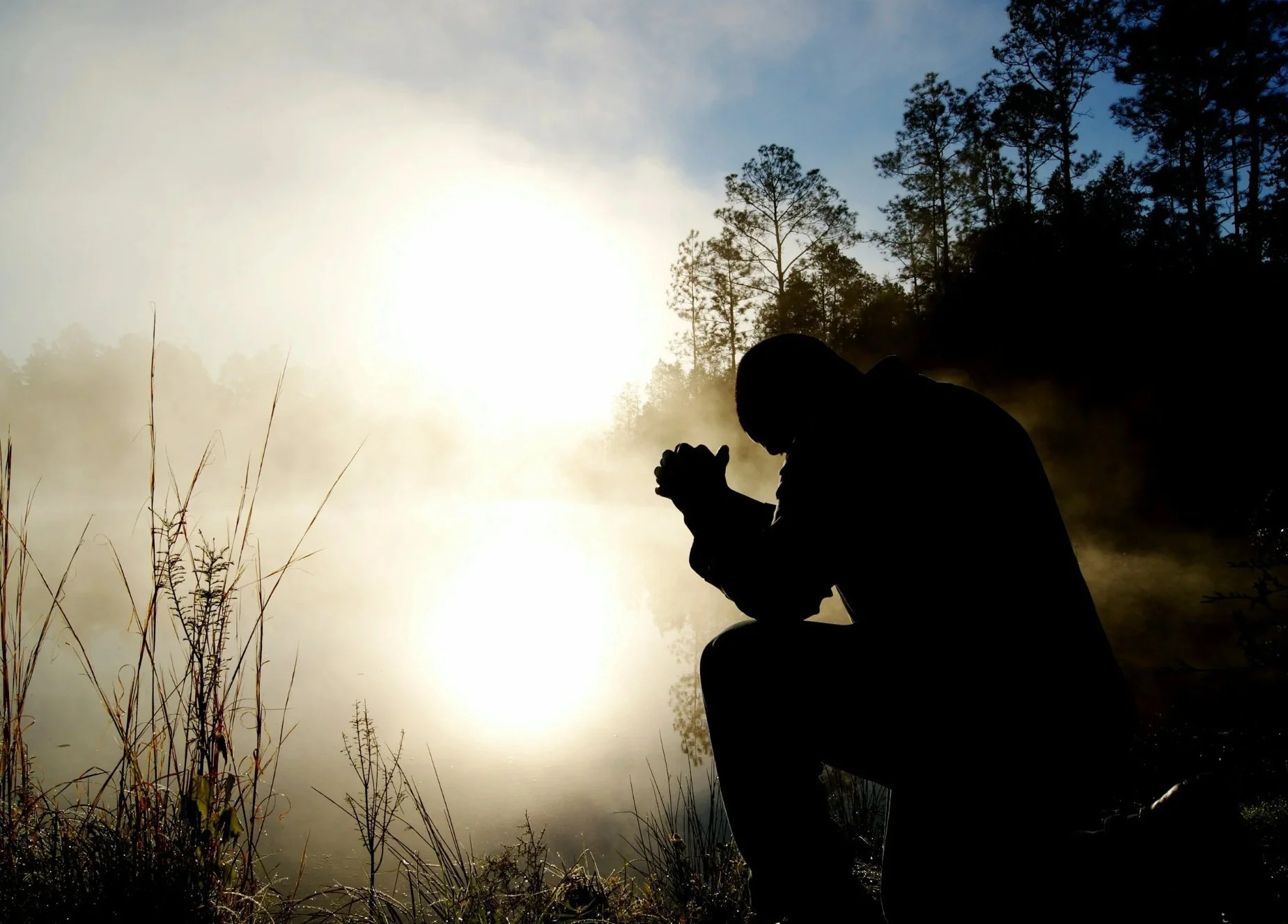
Often, the staff at Mill House Ministries will ask our readers for prayer. We did that recently with branching out into Substack and the Post 47 podcast that we have started. We ask for prayers during elections, when Israel is under attack, and we remind our readers to pray for others. However, there is something that we need to be doing more. Our staff needs to be praying for our readers. While we spend time praying for the different countries that read our posts, we would like to do more. So today, I want to ask our readers to send in prayer requests. Our staff wants to know how to specifically be praying for you! I have often said that prayer is the artillery fire in the born-again Christian’s arsenal, and I truly believe this. Which is why our staff wants to know how to be praying for our readers whether you have been with us from the beginning six years ago, or you have recently stumbled upon us. We are not meant to walk this Christian life alone, and while we are separated by more miles than I can count, that does not mean that we cannot be a part of your walk. So please, dear reader, send us your prayer requests, send us your questions, and send us what topics you would like us to discuss!
“16 Rejoice always, 17 pray without ceasing, 18 in everything give thanks; for this is the will of God in Christ Jesus for you.”
1 Thessalonians 5:16-18
Seek the truth and encourage one another,
Alex

Post 47 Substack
We are now on Substack with our very own podcast called Post47.

Thank you all for the prayers. What we have been praying about has finally happened! We are branching out and pushing our newest platform to reach the world with the good news of Jesus Christ. We are now on Substack and have a podcast dedicated to the Bible!
Post 47 arose from the recognition that Christians need to answer the call to be more than they currently are. Our name reflects the understanding that 1947 was a pivotal moment. First and foremost, the movement for Israel to become a nation was in full swing. The global world order was emerging, and the supernatural world was manifesting under what many commonly know as Roswell. Finally, in 1947, the Dead Sea Scrolls were discovered. In the present day, we see a need for truth like never before. The mainstream church ignores God’s Word, and for many in the world, they are looking for answers. We are here to help answer that call. Some might call us the Church Underground, that’s ok, the true church doesn’t mind meeting in odd places to study God’s Word and tell others about Jesus Christ.
Come join us!



To Be A Berean-Interpretation
How to study His Word accurately.

Many people believe that studying God’s Word is based on what the person believes or thinks. This is a falicy, in fact when we study God’s Word we need to make sure we are aligning our understanding as close as possible to God’s meaning. It would behoove us to get the correct translation, and meaning behind the scripture. It is always in our best interest to find the truth, whether through good or bad reasoning; the truth will ultimately be used for God's glory. Interpreting the bible is a theological nightmare where everyone has their own ideas of interpretation and study. However, what does God’s Word say? It is vital that we understand this and keep to what the scripture says only. When done properly, this can help us have a richer relationship with God. A.W. Tozer put it eliquently when he said, “The primary purpose of reading the Bible is not to know the Bible but to know God.” It is the goal of Satan to destroy God’s children and His creation. In doing so, if he can pull us away from God with improper interpretation, then he will. So it is very important that we follow these steps while interpreting the Word of God.
Scripture Interprets Scripture
It is important that we look at supporting scripture within the verses we are studying. When John wrote Revelation, when the Holy Spirit came to him, He reinforced his writing with Old Testament facts. In Revelation 1:7, it directly references Daniel 7:13 and Zechariah 12:10.
Context is Key
In reading Scripture, we must look at the historical setting, the audience, and who was the original author. When we look at the audience of scripture, it is written to them for us. In plain terms, it was written at the time for new believers during the age of the apostles, but for us in the future. “14. The heart of him who has understanding seeks knowledge, But the mouth of fools feeds on foolishness.” Proverbs 15:14. “15. The heart of the prudent acquires knowledge, And the ear of the wise seeks knowledge.” Proverbs 18:15 “16. All Scripture is given by inspiration of God, and is profitable for doctrine, for reproof, for correction, for instruction in righteousness.” 2 Timothy 3:16.
Identify the Genre
We must understand that there are different types of literature writings that require different approaches. The literal method of writings must be examined and read differently from allegorical methods, moral methods, and anagogical methods.
Look for the Author's Original Meanings
This is the point we must analyse what the original author meant for the original audience. Then how it will apply to today's standards and our own.
The Goal is to Know Christ
The Bible is the Word of God, and it is His words that lead us through life to adequately know Him and His Son. So, the Bible is to explain and show us the redemptive works of Jesus throughout the work of the Bible. Things that we must also use and be reminded of while using these tools. Do not do “surface reading”; this is basing what you read on what you think it sounds like, then applying it in your own way. Use tools for studying, as for a good example, I use multiple translations, and then I use the original language; there are also plenty of individuals that you may really rely on for studying the Bible. A. W. Tozer, Jack Hibbs, Francis Schaeffer, and others. Please remember to use them as a tool to help yourself, but not as biblical facts. Do not take everything without first examining God’s Word yourself. When we fail to measure what others say against God’s Word, this will lead us to misinterpret scripture and hinder our understanding of the Bible. A good way to remember is, do not forsake the literal interpretation as the first go-to. When individuals forsake this method of interpretation, they play a dangerous game that can eventually lead to misinterpretation. One of the biggest downfalls of this sinful world is how people strategically manipulate scripture and use just one verse or pieces of multiple verses, so that their agenda can be met.
“1. I charge you therefore before God and the Lord Jesus Christ, who will judge the living and the dead at His appearing and His kingdom: 2. Preach the word! Be ready in season and out of season. Convince, rebuke, exhort, with all longsuffering and teaching. 3. For the time will come when they will not endure sound doctrine, but according to their own desires, because they have itching ears, they will heap up for themselves teachers; 4. and they will turn their ears away from the truth, and be turned aside to fables. 5. But you be watchful in all things, endure afflictions, do the work of an evangelist, fulfill your ministry.” 2 Timothy 4:1-5
Stay the course for the Kingdom
Austin

Prayers for Israel!
Now is not the time to be silent.

Dear brothers and sisters in Christ,
I believe we need to take a moment and recognize the monumental geopolitical shift that is happening before our eyes. Israel, which has wanted nothing more than to live in peace, is having to deal with Hezbollah at their northern border. Over the years, Hezbollah has terrorized, killed, and caused extreme devastation to innocent people living in Israel. Sometimes, their victims were not peaceful Jews, but rather others living peacefully in Israel. Nevertheless, it appears that the time is coming to an end for the Iranian-backed terrorist organization.
Now, what does this mean for you and I as Christians? We are told to pray for the peace of Jerusalem. Psalm 122:6, "Pray for the peace of Jerusalem: “May they prosper who love you. 7 Peace be within your walls, Prosperity within your palaces.” 8 For the sake of my brethren and companions, I will now say, “Peace be within you.” 9 Because of the house of the Lord our God I will seek your good.” As believers, we are told to stand for justice, Micah 6:8 “He has shown you, O man, what is good; And what does the Lord require of you But to do justly, To love mercy, And to walk humbly with your God?”
And finally, we are told to ever be watchful for prophecy to be fulfilled. We could be looking at the fulfillment of Obediah verse 19-20 “The South shall possess the mountains of Esau, And the Lowland shall possess Philistia. They shall possess the fields of Ephraim And the fields of Samaria. Benjamin shall possess Gilead. 20 And the captives of this host of the children of Israel Shall possess the land of the Canaanites As far as Zarephath. The captives of Jerusalem who are in Sepharad Shall possess the cities of the South.” This would bring back part of Israeli territory under Israel’s control. This would also show just how incredible God’s word is by being precise. Nevertheless, we have a job to do. We need to be praying for Israel and the Jewish people, but also we need to be the voice of reason, not just to other believers who might not understand, but also to the world. Let us dig into just how this should happen.
There is a trend that is growing rampant here in the United States, but it is nothing that the world isn’t already dealing with. There is a growing amount of hatred for God’s people, the Jews. We have pastors coming out and saying that Jesus wasn’t Jewish, who disregard His genealogy because “it is too difficult to understand”. We have others saying that music that goes above 435 hertz was created to get people angry and prepare them for war, and was created by the Jews. We have pastors stepping forth and claiming that God is done with the Jews and that it is the church that will inherit God’s promises to the Jews. We have political influencers who call us Christians who support Israel are demon-possessed. This is what we need to stand against.
We need to be deep in our study of God’s word so that we can understand how the land that Israel is currently fighting for was already given to them by God. We need to know that God blessed the line of David so that his descendant, Jesus, would always sit on the throne. We need to be able to stand with our Jewish counterparts and know that God still has promises to them. If He can go back on the promises He has made, then He can go back on the promises to us. God is not done with Israel, and those who have truly placed their faith in His saving grace need to continue to stand with Israel.
Pray for Israel and pray that more will awaken to God’s grace and mercy,
Mill House Ministry Staff

Prayer and Thoughts 2
We asked for prayer and you answered. We asked God to give us an answer and He did more then that.

Last Monday, we asked for prayer, and God answered! Thank you for helping and standing with us as we asked God for His advice.
This week, we want to give you a little hint at what is coming. In the book of Acts, we see men and women who were called up to the “Major Leagues” to present the gospel, to disciple other brethren in the faith, and to be about the work of Jesus Christ. Today, I stand to tell you that at Mill House Ministries, we are moving forward with this commissioning. Soon, we will be announcing a new platform and the outreach we will be taking. The Latter Days are upon us, the salvation and our Blessed Hope talked about in numerous scripture verses is imminent. And yet, I find myself drawing ever more to God’s Word and a burning desire to share and uplift the body of Christ.
I am reminded by the book of Jude in verses 20-23, that what we do matters. Read these simple three verses and realize the monumental declaration being made by Jude, the half-brother of Jesus Christ, “20 But you, beloved, building yourselves up on your most holy faith, praying in the Holy Spirit, 21 keep yourselves in the love of God, looking for the mercy of our Lord Jesus Christ unto eternal life. 22 And on some have compassion, making a distinction; 23 but others save with fear, pulling [them] out of the fire, hating even the garment defiled by the flesh.”
Simply put, but not so simply understood or applied. Yet, this is why we must be about our studies of His word. This is why we are pressing forward with this new part of Mill House Ministries. Let’s explore this section of Jude together and see the richness of God’s calling for each of us right now.
Starting first with the very basic beginning, “Building yourself up”, how do we do this? Building on our faith is best done by serving, Proverbs 11:25b, “and he who waters will also be watered himself.” We have seen this happen just within our staff here at Mill House Ministries. Praying in the Holy Spirit is a cornerstone of what only born-again believers can do. The Holy Spirit is our representative of the Trinity with us right now, which we should not take in vain, but rather in gratitude and reverence. For the saved, John 14:19-31 is our guiding post on what the Holy Spirit is doing. It is a sign for us of our rebirth and adoption as sons and daughters of God, according to 1 John 3:24. For the unsaved, the Holy Spirit is the judgment, which we can clearly see in John 16.
Yet, Jude is not done there; he next brings light on what we as believers should be doing when it comes to others. Jude goes on to say, we need to keep ourselves in the love of God. To understand this challenge, we need to understand what love is, 1 John 5:3 “For this is the love of God, that we keep His commandments. And His commandments are not burdensome.” We need to be about what God has told us to do. The most basic and intrinsic occupation of a child of God is to follow His commands. To act like Him. John would go on to define this in a very actionable and observable way, 1 John 4:17-19, “Love has been perfected among us in this: that we may have boldness in the day of judgment; because as He is, so are we in this world. 18 There is no fear in love; but perfect love casts out fear, because fear involves torment. But he who fears has not been made perfect in love. 19 We love Him because He first loved us.” There is no better way to help others than to love them as God loved us.
Jude continues to expound that we are to be looking for our redemption, for the Church, this is the Rapture. Jesus’ own words in John 14 and Revelation 3 identify this as a solid doctrine of the Church which we are to hold on to. It is this burning desire that keeps me focused on reaching as many people for the gospel of Jesus Christ as I can. To obey the Word and analyze each and every space in each and every verse. I hope this does the same for you. Finally, Jude helps us understand this as an eternal consequence that we should be rescuing those from the fiery clutches of death. This is our goal, and our desire, and why we are pressured each day to strive for Jesus in a manner worthy of His children. To be actively about His work, His love, and His will is beyond calculable and pure joy. Our hearts should be aligned with His heart. Personally, our goal needs to be His desire. Proverbs 13:19 states, “a desire accomplished is sweet to the soul.”
This is why we are pushing forward and will be announcing very soon a monumental change coming to Mill House Ministries. Once again, thank you for your prayers. Until next time, remember to be in His Word and ask Him for guidance.
Hold until relieved, our Blessed Hope is coming,
JL